
Armor Courts
Tennis Court Resurfacing | Athletic Court Construction | Court Contractors/Builders

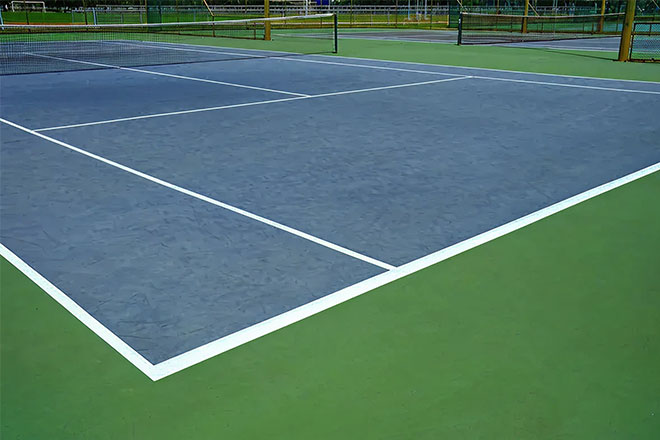
Constructing a tennis court is a detailed process that requires precision, planning, and the right materials. When done professionally, asphalt tennis court construction delivers a smooth, resilient playing surface that supports consistent ball response and long-term performance. Understanding how each phase of construction is handled helps court owners feel confident about their investment and the finished result.
Rather than being a single-step project, court construction involves multiple stages working together. Each step plays a role in ensuring durability, safety, and playability, especially in outdoor environments where weather and usage place constant demands on the surface.
Why Asphalt Is Commonly Used for Tennis Courts
Asphalt is a popular choice for tennis courts because it offers flexibility, strength, and cost efficiency. Unlike rigid materials, asphalt can better accommodate minor ground movement, which helps reduce surface stress over time. This adaptability makes it well-suited for outdoor courts exposed to temperature changes and seasonal conditions.
When properly installed and maintained, asphalt provides a stable foundation for acrylic coatings and line striping. Its ability to create a uniform surface supports predictable ball bounce and comfortable player movement.
Site Evaluation and Layout Planning
Every successful project begins with a detailed site evaluation. Professionals assess soil conditions, slope, drainage patterns, and available space. This ensures the court is positioned correctly and designed to handle environmental factors such as rainwater runoff and ground settling.
Layout planning includes confirming court dimensions, orientation relative to sun exposure, and surrounding clearances. These decisions directly affect player comfort and long-term surface performance.
Excavation and Subgrade Preparation
Once the site is approved, excavation begins. Professionals remove existing soil, vegetation, and debris to reach a stable subgrade. This step establishes a stable foundation for the court structure.
The exposed subgrade is carefully graded and compacted to achieve uniform density. Proper compaction matters, as uneven or loose soil can lead to surface deformation and cracking later on.
Base Installation and Compaction
A crushed stone or aggregate base is installed over the prepared subgrade. This base layer provides strength, stability, and drainage support beneath the asphalt surface, acting as the foundation that directly influences the court’s longevity and structural reliability.
Professionals carefully spread and compact the base material in layers to ensure even support across the entire court. This process minimizes movement and helps prevent water from pooling beneath the surface, which can weaken the court over time and increase the risk of cracking.
Drainage Considerations
Effective drainage is essential for protecting the court’s structure. Professionals design grading and drainage systems that direct water away from the playing surface and base layers.
Without proper drainage, moisture can penetrate the base and lead to surface failure. Addressing drainage during construction helps extend the lifespan of the court and reduces maintenance needs.
Asphalt Paving
Once the base is properly prepared, asphalt is installed using specialized paving equipment. Professionals control thickness and temperature to achieve a smooth, uniform surface that supports consistent play and long-term durability.
The asphalt is compacted while still hot to ensure proper density and bonding. Precision during this stage is especially important, as surface inconsistencies can affect ball bounce, player safety, and future maintenance requirements.
Curing and Surface Stabilization
After paving, the asphalt must cure before additional layers are applied. This stabilization period allows oils to dissipate and the surface to harden properly.
Professionals protect the court from traffic and environmental stress during this time. Allowing the asphalt to cure fully helps prevent premature wear and improves adhesion for future coatings.
Acrylic Coating Application
Once cured, the asphalt surface is coated with acrylic layers designed for tennis play. These coatings enhance traction, protect the asphalt, and provide the court’s final color.
Multiple coats are applied to achieve uniform texture and durability. This step also prepares the surface for accurate line striping and long-term performance.
Line Striping and Final Inspection
Regulation tennis lines are carefully measured and applied to ensure accuracy and compliance. Professionals use precise techniques to maintain clarity and consistency across the court.
A final inspection follows, checking surface smoothness, drainage performance, and overall playability. Any adjustments are addressed before the court is opened for use.
How Armor Courts Can Help With Your Tennis Court Project
At Armor Courts, we take a careful, hands-on approach to every tennis court we build. Our team brings over 15 years of combined experience to each project, focusing on quality materials, proven construction methods, and clear communication throughout the process.
If you are planning a new tennis court or upgrading an existing one, contact us today to receive a comprehensive estimate.