
August 19, 2026
Tips For Turning Your Driveway Into A Basketball Court
Quick Summary
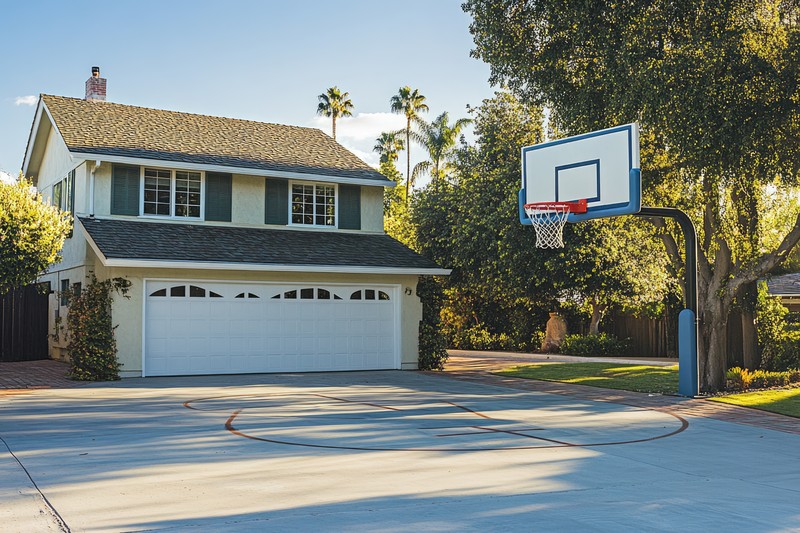
A driveway sitting idle for most of the day represents an untapped opportunity for families who love the game. Converting that space into adriveway basketball court gives kids and adults alike a place to play without leaving home, but doing it well requires more than just mounting a hoop at the end of the pavement. From surface prep to hoop placement, a handful of smart decisions separate a basketball court driveway that gets used every day from one that quickly feels like an afterthought.
Whether you are starting with bare concrete or planning a full resurface, these driveway basketball court ideas will help you get the layout and surface right from the start.
Assessing Your Existing Driveway
Before any court transformation begins, it is worth evaluating the current condition of your driveway. Cracks, uneven grading, and drainage issues should be addressed first, since building on a compromised surface leads to bigger problems later. If your driveway already has significant wear, ourbasketball court resurfacing team can assess whether a coating system or a more involved repair is the better starting point.
Space is also a factor. Most residential driveways cannot accommodate a full regulation court, so scaling down the layout while still allowing for a real shooting and dribbling experience is often the practical approach.
Surface Preparation and Coating Options
Once the base is assessed, applying a proper acrylic coating system transforms a plain concrete or asphalt driveway into a true playing surface. These coatings improve grip, reduce glare, and provide the cushioning that protects joints during extended play sessions. Color options also allow homeowners to customize their court, whether that means matching a favorite team’s colors or simply improving curb appeal.
For driveways with cracking or drainage concerns, addressing those issues during the coating process prevents the same problems from resurfacing shortly after completion.
Hoop Placement and Layout Tips
Positioning the hoop correctly matters just as much as the surface itself. In-ground systems offer the most stability and a professional look, while portable systems provide flexibility for driveways shared with vehicles. Regulation height is ten feet, though adjustable systems work well for households with younger players still developing their game.
Line striping, even on a scaled-down court, helps define the key, free throw line, and boundary for a more authentic playing experience. Ourmodular sports flooring options are also worth considering for driveways where a full acrylic system is not the right fit, offering a different texture and installation approach.
Creating a Functional Half Court Layout
A driveway does not need regulation dimensions to create an enjoyable basketball experience for recreational players at home. A half court layout can focus on the basket, free throw area, three-point shooting zone, and enough surrounding space for safe movement.
Measuring the available pavement before selecting equipment helps determine how much of the driveway should remain available for vehicles.
Homeowners should also account for garage doors, walkways, landscaping, and property boundaries when deciding where the playing area should begin and end.
Choosing Court Colors and Line Markings
Custom colors and accurate markings can turn an ordinary driveway into a dedicated recreational court with a polished appearance.
Homeowners can choose contrasting shades for the playing area and surrounding boundaries while selecting line colors that remain easy to see during bright Florida afternoons. Clear markings also help younger players learn basic basketball positioning and shooting distances as they develop their skills.
A professional coating application creates cleaner edges and consistent line widths, helping the finished court look intentional instead of resembling an improvised driveway setup.
Lighting for Evening Play
Adding dedicated lighting can significantly increase the hours available for driveway basketball, particularly for families with school and work schedules during the day.
Fixtures should illuminate the playing area evenly without creating excessive glare for players looking toward the basket. Pole placement, fixture height, and beam direction should also account for nearby homes, windows, sidewalks, and neighboring properties.
Motion controls or scheduled lighting systems can make evening use convenient while limiting unnecessary illumination when the court remains unused.
Planning for Shared Driveway Use
A driveway basketball court needs to function alongside the everyday activities that originally made the driveway necessary. Removable hoops, portable equipment, and clearly defined court boundaries can make it easier to transition between recreational use and vehicle access.
Homeowners should also consider where basketballs, portable nets, chairs, and other equipment will be stored when the driveway needs to remain clear.
Designing around these practical requirements creates a court that fits naturally into daily routines instead of turning a useful household space into a permanent obstacle.
Fencing and Safety Considerations
Depending on your neighborhood and traffic patterns, adding fencing or barriers can help keep the ball contained and improve safety for younger players. Ourfootball court fencing guide covers many of the same fencing principles that apply to residential basketball setups, including material options and installation best practices.
Getting Professional Help for Your Project
While some homeowners attempt basic driveway court upgrades themselves, working with an experienced team ensures the surface performs well for years rather than needing early rework. Armor Courts brings professional-grade materials and application techniques to residential projects of every size, backed by a three-year guarantee on paint and a one-year guarantee on workmanship.
Browsing ourgallery can offer inspiration for what your own driveway transformation might look like.
Ready to turn your driveway into a real home court?Contact our team for a free estimate tailored to your space.
Frequently Asked Questions
Most driveways can be adapted, though size, grading, and existing surface condition will influence the final layout and coating approach.
Acrylic coating systems are popular for driveways since they improve grip, reduce glare, and add cushioning for extended play.
In-ground systems offer more stability and a cleaner look, while portable hoops provide flexibility for shared driveway spaces.
Costs vary based on driveway condition, size, and coating choice, so a site assessment is the best way to get an accurate estimate.
Fencing is not required but can improve safety and ball containment, especially in neighborhoods with nearby streets or younger players.