
August 1, 2026
Things To Know Before Building A High School Basketball Court
Quick Summary
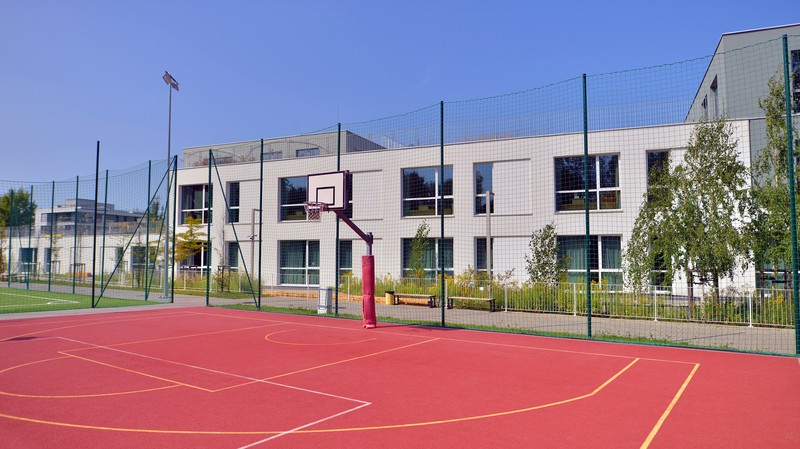
Picture a gym full of energy moving outdoors: squeaking sneakers, a scoreboard buzzer, and a crowd packed along the sideline. That is the kind of atmosphere a well-builthigh school basketball court can create, but only when the planning behind it gets the details right. Schools and athletic directors often underestimate how many decisions go into a court that will handle daily practices, competitive games, and years of Florida weather. From layout to surfacing, every choice affects how the court plays and how long it lasts.
Before crews break ground, there are a handful of essentials worth understanding: how wide is a high school basketball court, what basketball court measurements are regulation, and which construction methods actually hold up under heavy student use. Getting these right the first time saves schools from costly repairs down the line.
How Wide Is a High School Basketball Court?
A regulation high school basketball court measures 84 feet long by 50 feet wide, which is smaller than the NBA’s 94 by 50-foot layout but still requires precise basketball court measurements for the key, free throw line, and three-point arc. The National Federation of State High School Associations sets these standards, and any deviation can affect eligibility for sanctioned play. Getting the dimensions right from day one avoids expensive rework once lines are painted and hoops are installed.
Beyond the playing surface, schools need to account for out-of-bounds clearance, typically a minimum of three feet on all sides, plus space for team benches, scorer’s tables, and spectator areas. Site planning should also consider drainage, sun orientation, and accessibility for maintenance equipment.
Choosing the Right Surface
Surface selection is where most of the long-term performance comes from. Asphalt bases topped with acrylic coatings are common for outdoor school courts because they balance cost with durability. Concrete bases last longer overall but require a higher upfront investment. For schools weighing options, ourbasketball court resurfacing services can also extend the life of an existing surface if a full rebuild is not in the budget yet.
Color choices matter too. Two-tone designs with contrasting key areas improve visibility for players and officials, while UV-resistant acrylic coatings help colors stay vibrant despite constant sun exposure common across Florida schools.
Construction Steps That Matter
Basketball court construction begins with a soil and drainage assessment, since poor drainage is one of the leading causes of premature cracking. After grading, the base layer is installed, followed by leveling courses and the acrylic surface system. Line striping, goal system installation, and fencing typically round out the project.
Schools often benefit from working with amodular sports flooring alternative in gymnasiums or covered pavilions, which offers shock absorption and consistent bounce for indoor practice areas that complement the outdoor court.
At Armor Courts, we walk school administrators through each phase so there are no surprises once construction begins, from permitting through final striping.
Accessibility and Safety Considerations
School basketball courts should be planned around accessibility, player safety, and spectator movement from the earliest design stages. Clear pathways around the court help students, coaches, officials, and visitors move safely between playing areas, seating, entrances, and other athletic facilities.
Accessible routes should connect the court with parking areas, restrooms, locker rooms, and spectator spaces while maintaining appropriate clearance around equipment and boundaries. Safety planning should also address fencing, lighting, goal systems, surface traction, and transitions between different pavement areas.
A thoughtful design reduces hazards while creating a facility that can accommodate practices, games, school events, and community athletic programs.
Maintenance Planning for Long-Term Performance
A new basketball court represents a significant investment, so schools should establish a maintenance plan before construction reaches completion. Routine cleaning, drainage inspections, crack repairs, and periodic coating inspections can help identify surface problems before they become larger restoration projects.
Florida’s intense sunlight, heavy rainfall, and seasonal weather patterns can place additional stress on outdoor courts throughout the year. Schools should also inspect goal anchors, fencing, expansion joints, and painted lines as part of regular facility maintenance.
Planning for routine care helps preserve court appearance, playing characteristics, and structural performance while reducing the likelihood of unexpected repairs.
Budgeting and Timeline Expectations
Costs vary based on size, base material, and site conditions, but schools should plan for several weeks of construction once permits are approved. Weather delays are common in South Florida during the rainy season, so building flexibility into the project timeline helps keep everything on track. Reviewing ourcompleted projects can give administrators a realistic sense of scope, materials, and finished results for similar school facilities.
Working With Experienced Builders
Because school courts see heavier and more frequent use than most residential surfaces, working with a contractor who understands sport-specific construction matters.
Armor Courts has more than 15 years of combined experience building and resurfacing courts for schools, municipalities, and athletic programs throughout Florida, and every project includes a three-year guarantee on paint and a one-year guarantee on workmanship. Our team can walk your facilities staff through us to learn more about our background and approach before committing to a project.
If your school is ready to move forward,reach out to our team for a detailed estimate built around your campus, timeline, and budget.
Frequently Asked Questions
A regulation high school court is 84 feet long and 50 feet wide, following NFHS guidelines used across most state athletic associations.
Acrylic-coated asphalt is the most common choice for outdoor school courts because it balances affordability with strong performance, while concrete bases offer a longer lifespan for schools planning decades of use.
Most projects take several weeks from grading to final striping, though timelines shift depending on weather, permitting, and site preparation needs.
Yes, proper grading and drainage are essential to prevent water pooling, which can lead to cracking and surface deterioration over time.
Most acrylic surfaces benefit from resurfacing every four to eight years depending on usage levels, climate exposure, and maintenance routines.