
Armor Courts
Tennis Court Resurfacing | Athletic Court Construction | Court Contractors/Builders

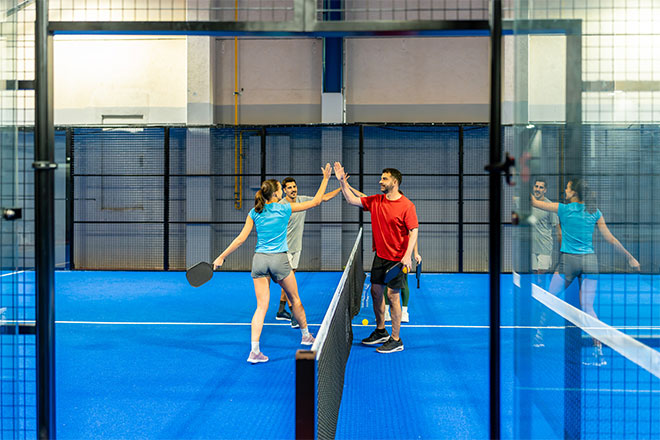
Indoor pickleball continues to grow rapidly. Players across the country seek climate-controlled courts where they can train, compete, and connect throughout the year. For entrepreneurs, this demand creates real opportunity. Launching an indoor pickleball business requires far more planning than leasing a warehouse and painting court lines.
From real estate decisions and pickleball court construction costs to membership models and staffing, every choice impacts long-term profitability. If you are thinking about launching an indoor pickleball facility, here are the most important factors to evaluate before getting started.
Market Demand in Your Area
Evaluate whether pickleball already has strong traction in your region. Public courts that remain crowded, active local leagues, and limited indoor access during extreme weather often signal strong demand.
Research nearby competitors. If other indoor facilities exist, analyze their pricing, court count, programming, and customer reviews. A saturated market may require a more specialized offering, such as advanced training programs or premium amenities.
Understanding local interest levels helps shape your business model and revenue projections.
Choosing the Right Location
Location influences foot traffic, accessibility, and long-term operating costs. Large warehouse-style buildings are common for indoor pickleball businesses. High ceilings are important for lobs and overhead shots. A minimum ceiling height of 18 to 20 feet is typically recommended.
Consider parking availability, proximity to residential neighborhoods, and ease of highway access. Players are more likely to commit to leagues and memberships when travel is convenient.
Lease terms also deserve close attention. Long-term leases provide stability but increase financial commitment. Work with commercial real estate professionals familiar with sports facilities.
Facility Size and Court Layout
Court count directly affects revenue potential. A standard pickleball court measures 44 feet by 20 feet, but you must factor in additional clearance around each court.
Most indoor facilities aim for at least 5 feet behind baselines and several feet along sidelines. Multi-court layouts should include spacing between courts to prevent interference.
A larger facility allows for:
- Multiple courts running simultaneously
- Tournaments and league play
- Private lessons and clinics
- Dedicated warm-up or practice areas
The more courts you have, the more scheduling flexibility you gain. However, more space also increases construction and utility costs.
Construction and Surface Selection
Court surface quality defines the player experience.
Many indoor pickleball businesses use a concrete slab topped with a multi-layer acrylic coating system. This provides consistent ball bounce and dependable traction. Some facilities invest in cushioned sport systems to reduce joint stress during extended play.
Lighting, acoustics, and ventilation must also be planned during construction. LED high-bay fixtures provide bright, even illumination. Acoustic panels help manage noise levels in enclosed buildings.
Surface preparation and professional striping are best handled by a licensed athletic court contractor. A well-built facility enhances reputation and attracts repeat customers.
Budgeting and Startup Costs
Starting an indoor pickleball business requires substantial capital.
Major cost categories include:
- Leasehold improvements
- Court construction and surfacing
- Lighting and HVAC upgrades
- Net systems and accessories
- Insurance and permits
In addition to build-out expenses, budget for operating costs during the first several months. Utilities, staffing, and marketing expenses begin before revenue stabilizes.
Creating realistic financial projections helps determine membership pricing and court rental rates.
Revenue Streams and Pricing Models
Financial stability depends on diversified income sources. Successful facilities rarely rely on a single stream.
Common revenue sources include:
- Membership plans
- Drop-in court rentals
- League fees
- Private lessons
- Tournaments and events
- Pro shop merchandise
- Food and beverage sales
Membership tiers often include discounted court time and priority reservations. Some operators structure pricing around peak and off-peak hours. Corporate bookings and group events create additional steady income. Pricing must remain competitive while covering fixed and variable expenses within your indoor pickleball business.
Staffing and Operations
Operating an indoor pickleball business involves more than court maintenance.
Staff responsibilities may include front desk management, league coordination, lesson instruction, cleaning, and facility oversight. As the business grows, hiring experienced instructors can attract more serious players.
Customer service plays a major role in retention. A welcoming environment encourages repeat visits and positive word-of-mouth marketing. Clear scheduling systems help manage court bookings efficiently. Many facilities use online reservation platforms to streamline operations.
Programming and Community Building
A successful pickleball business builds community, not just courts. Offer structured programming such as beginner clinics, skill-level leagues, youth programs, and round-robin events. These activities create regular traffic and foster loyalty.
Host tournaments to draw players from neighboring areas. Social events, open play nights, and charity fundraisers strengthen relationships within the local pickleball scene. Building a sense of community encourages members to view the facility as their home court.
Marketing and Brand Positioning
Even in areas with strong demand, marketing remains important. Develop a strong online presence with an updated website and active social media channels. Highlight court quality, programming, and member testimonials.
Search engine optimization helps potential players find your facility when searching for indoor pickleball options nearby.
Partner with local businesses and fitness communities to expand reach. Referral incentives can encourage existing members to bring friends. Clear branding and consistent messaging position your facility as a professional, welcoming destination.
Insurance and Legal Considerations
Sports facilities require structured risk management. Insurance policies tailored to recreational operations protect against accidents and injuries. Legal review of membership agreements and waiver forms reduces liability exposure. Clear cancellation policies, refund procedures, and facility rules prevent disputes.
Compliance with local zoning regulations and building codes is also necessary before opening.
Licensed Florida Pickleball Court Construction & Resurfacing Experts
If you are launching an indoor pickleball business, the quality of your courts will define your reputation. Armor Courts specializes in professional athletic court construction and resurfacing in Florida, delivering high-performance pickleball, basketball, tennis, and multi-sport surfaces built for long-term durability.
As a family-owned company with over 15 years of combined experience, we handle everything from surface preparation and crack repair to premium acrylic coating systems and precise striping. We stand behind our work with a three-year guarantee on paint and a one-year guarantee on workmanship.
When you are ready to build courts that attract and retain players, contact our team to get started.