
Armor Courts
Tennis Court Resurfacing | Athletic Court Construction | Court Contractors/Builders

The Process Behind Constructing A Concrete Basketball Court
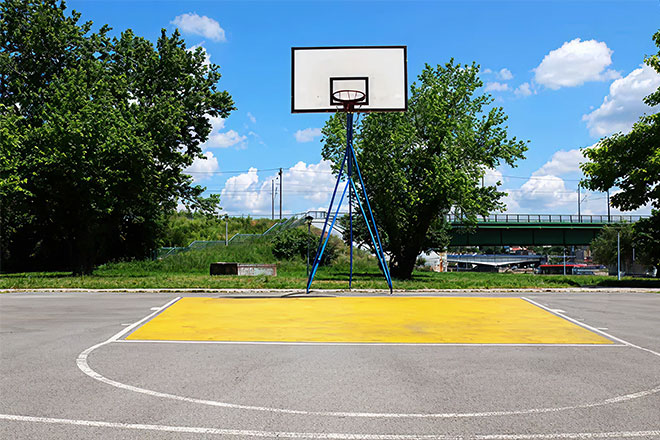
Building a basketball court is a significant investment, whether it’s for a residential property, school, community space, or recreational facility. A well-constructed and well-maintained court surface supports consistent play, enhances safety, and holds up under years of use. That is why professionals follow a structured, detail-driven approach when constructing a concrete basketball court, ensuring the final result performs as well as it looks.
This process involves careful planning, proper site preparation, and finishing techniques that work together to create a surface built for longevity. Understanding each stage helps court owners feel confident about what goes into a successful project and why professional expertise matters.
Why Concrete Is a Trusted Choice for Basketball Courts
Concrete is widely used for basketball courts because of its strength, stability, and adaptability. When properly installed, it provides a solid base that supports consistent ball bounce and reliable player footing. Its durability also makes it well-suited for outdoor environments where weather and frequent use can take a toll on other materials.
With the right base preparation and surface treatments, concrete courts can be finished to provide traction, comfort, and long-term resistance to cracking or settling.
Site Evaluation and Planning
Every project begins with a thorough site evaluation. Professionals assess soil conditions, drainage patterns, available space, and surrounding features that could affect construction. This step ensures the court is positioned correctly and designed to handle environmental factors such as water runoff and ground movement.
Planning also includes determining court dimensions, orientation, and usage needs. These decisions influence everything from player comfort to surface longevity.
Ground Preparation and Excavation
Proper ground preparation is one of the most important steps in construction. Professionals excavate the area to the required depth, removing unstable soil and debris. This creates a clean, level foundation that supports the concrete slab.
A compacted base layer is then installed to promote stability and reduce the risk of settling. Skipping or rushing this step often leads to surface issues later, which is why professionals take extra care here.
Drainage and Base Installation
Effective drainage protects the court from moisture-related damage. Professionals design drainage systems that direct water away from the playing surface, helping prevent erosion and cracking over time.
The base layer is carefully graded and compacted to provide even support. This layer works in tandem with drainage solutions to ensure the court remains stable through changing weather conditions.
Forming and Reinforcement
Before concrete is poured, forms are installed to define the court’s shape and edges. These forms ensure clean lines and accurate dimensions.
Reinforcement materials, such as rebar or wire mesh, are added to strengthen the slab. Reinforcement helps distribute stress evenly across the surface, reducing the likelihood of structural cracks as the concrete expands and contracts.
Pouring and Finishing the Concrete
Once preparation is complete, the concrete is poured evenly across the area. Professionals carefully control thickness and consistency to achieve a uniform slab.
Finishing techniques are applied to create a smooth yet slip-resistant surface. Timing is critical during this phase, as improper finishing can affect both appearance and performance. Skilled professionals know how to balance smoothness with traction for safe, enjoyable play.
Curing and Surface Protection
Curing is a critical phase that allows the concrete to develop strength gradually and evenly. After the pour and finishing stages, the surface must retain moisture for a controlled period so the concrete can properly hydrate. If this process is rushed or interrupted, the surface may dry too quickly, leading to weakened areas, surface dusting, or early cracking.
During curing, professionals actively protect the court from premature drying caused by direct sunlight, wind, or high temperatures. In cooler conditions, they also guard against temperature drops that can interfere with the curing process. Proper curing significantly improves durability, helping the court resist wear, surface defects, and structural stress over time.
Line Striping and Final Details
Once the concrete has cured, professionals apply regulation basketball lines and any additional markings. Precision is key to ensuring accurate gameplay and a polished appearance.
Final inspections are conducted to confirm surface consistency, drainage performance, and overall quality. This step ensures the court is ready for use and meets professional standards.
How Armor Courts Can Help Bring Your Project to Life
At Armor Courts, we take pride in guiding clients through every stage of basketball court construction with clarity and care. Our team brings over 15 years of combined experience to each project, focusing on quality materials, precise workmanship, and results that last.
If you’re considering a new basketball court or upgrading an existing surface, contact us today to speak with our team and receive a comprehensive estimate.
Hard Court Guide Download
Download a free copy of our Hard Court Maintenance & Repair guide
Free