
Tennis Court Construction: Key Considerations Before You Build
Quick Summary
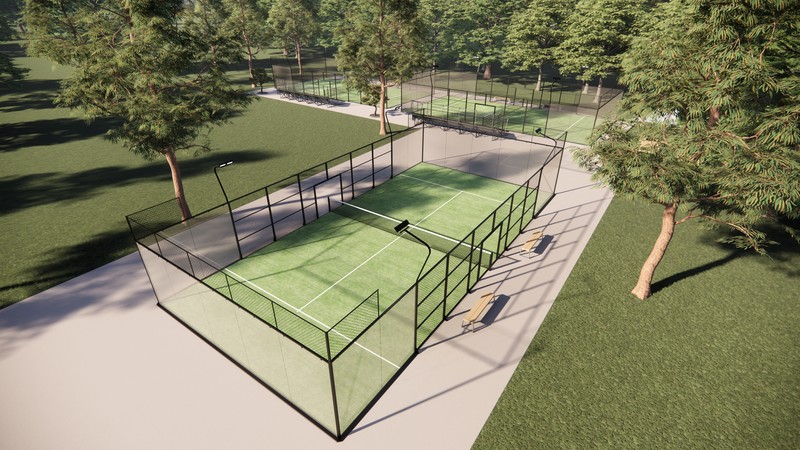
Building a new tennis court requires careful attention to site selection and orientation, soil and drainage conditions, base material, surface type, fencing, lighting, and net systems. North-south court orientation reduces sun glare during play, while proper drainage and base engineering prevent premature surface failure, particularly in Florida’s rainy climate. Choosing between hard court and clay surfaces depends on playing preference and maintenance tolerance. Working with an experienced contractor who understands these variables, and budgeting for long-term maintenance, helps property owners build a tennis court that performs reliably for many years.
Planning a tennis court construction project involves far more than choosing a color and painting lines on a slab. Site conditions, surface material, drainage, orientation, and long-term maintenance needs all influence how a finished court performs for years to come.
Armor Courts has built and renovated tennis courts throughout South Florida for country clubs, residential communities, schools, and municipalities, and we know that thoughtful planning upfront leads to a better outcome than rushing into construction.
Site Selection and Orientation
Choosing the right location is one of the most important early decisions. Ideally, a tennis court should be oriented north to south to minimize the impact of direct sun in players’ eyes during morning and evening matches.
Site selection should also account for available space, since a regulation doubles court requires 120 feet by 60 feet, including surrounding buffer zones for player movement and safety.
Soil and Drainage Assessment
Before construction begins, the site’s soil composition and drainage characteristics need to be evaluated. Poor drainage leads to standing water, base erosion, and premature surface failure, particularly in a climate like South Florida’s, where heavy rain is common throughout much of the year.
Proper grading and a well-engineered base layer help the court shed water correctly and remain stable over time.
Choosing the Right Base Material
The base beneath a tennis court’s surface plays a critical role in long-term durability. Asphalt bases are common for their strength and cost-effectiveness, while some clients opt for concrete bases for added longevity.
For those specifically interested in traditional playing characteristics, clay court construction offers a different playing experience altogether, with unique maintenance requirements compared to hard court surfaces.
Surface Material Options
Hard courts using acrylic-coated asphalt or concrete remain the most popular choice for their durability and relatively low maintenance needs. These surfaces offer consistent ball bounce and hold up well to Florida’s climate when properly installed and maintained.
Clay courts provide a different playing feel favored by some competitive players, though they require more frequent maintenance, including regular watering and rolling, to remain in top condition.
Fencing and Perimeter Considerations
Fencing serves both a functional and safety purpose, containing balls within the court and defining the boundary for spectators and passersby. Fence height, typically ten feet for tennis courts, and gate placement should be planned early in the design process to allow smooth access and appropriate containment during play.
Lighting for Extended Play
For facilities that want to maximize court usage, lighting extends playable hours into the evening. This is particularly valuable for community and commercial properties looking to increase return on their investment by allowing more members or residents to use the court throughout the day.
Net Systems and Court Accessories
Beyond the surface itself, quality net systems, center straps, and net posts contribute to a professional playing experience. Facilities hosting organized play or tournaments should confirm these accessories meet regulation standards for proper net height and tension.
Budgeting for Construction and Long-Term Maintenance
New tennis court construction represents a significant investment, and property owners should budget not only for the initial build but also for ongoing court maintenance to protect that investment over time.
Regular cleaning, crack monitoring, and periodic resurfacing every several years are all part of keeping a tennis court in excellent condition long after construction is complete.
Permitting and Local Regulations
Most municipalities require permits before new court construction begins, and requirements can vary depending on lot size, setback rules, and homeowners association guidelines. Understanding these requirements early in the planning process helps avoid delays once construction is scheduled.
An experienced contractor familiar with local jurisdictions throughout South Florida can help property owners navigate this process more efficiently, submitting the correct documentation and anticipating any site-specific requirements before they become obstacles.
Timeline Expectations for a New Build
Property owners planning a new tennis court should expect the full process, from site preparation through final curing, to take several weeks depending on scope and weather conditions. Excavation and base preparation typically take the longest, since proper compaction and grading are essential to a stable, long-lasting surface.
Surfacing, striping, and curing follow once the base has been inspected and approved. Building extra time into the schedule for potential weather delays, particularly during Florida’s wet season, helps set realistic expectations from the outset.
Choosing Between a New Build and a Renovation
Some properties already have an existing court that has fallen into disrepair, and it is worth evaluating whether a full rebuild or a renovation makes more financial sense. In many cases, a court with a structurally sound base only needs professional court resurfacing rather than complete reconstruction, which can save significant time and cost.
However, courts with severe base failure, extensive drainage problems, or outdated dimensions that no longer meet current standards may be better served by starting fresh with new construction.
Working With an Experienced Contractor
Because so many variables affect the outcome of a tennis court construction project, from soil conditions to surface material to drainage engineering, working with an experienced contractor makes a significant difference.
Armor Courts is a family-owned business with over fifteen years of combined experience, and our design and estimating team works closely with clients to align court plans with usage goals, surface preferences, and budget expectations.
We back our construction projects with a three-year guarantee on paint and a one-year guarantee on workmanship, and we invite prospective clients to browse our completed projects to see examples of tennis courts we have built throughout the region.
Our team is also available to walk through material samples and design options during an initial consultation, so every client feels confident before construction begins.
Ready to start planning your new tennis court? Schedule a free consultation with Armor Courts today.
Frequently Asked Questions
How much space is needed for a regulation tennis court?
A regulation doubles court requires 120 feet by 60 feet, including buffer zones around the playing area for safe player movement.
What is the best surface material for a tennis court in Florida?
Acrylic-coated asphalt or concrete hard courts are popular in Florida for their durability and relatively lower maintenance needs compared to clay.
Why does court orientation matter for tennis construction?
North-south orientation minimizes sun glare in players’ eyes during matches, particularly in early morning and late afternoon play.