
Shuffleboard Court Dimensions: How Much Space Do You Need?
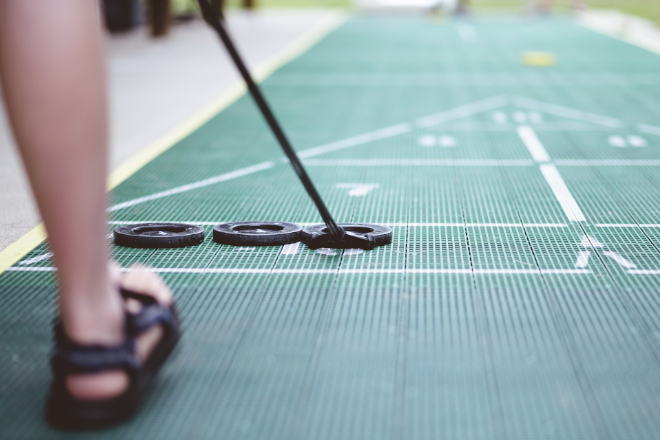
Accurate shuffleboard court dimensions shape how the game feels, how players move, and how safely the space functions over time.
A court that looks properly sized on paper can still fall short if clearance, access, and surface layout are not planned together. From outdoor courts to indoor table setups, every inch affects usability.
Understanding space requirements early helps avoid layout conflicts, restricted movement, and costly adjustments. With the right planning approach, a shuffleboard area becomes a well-structured, long-term recreational asset rather than a constrained installation.
Understanding Full-Size Outdoor Court Requirements
A standard outdoor shuffleboard court follows a long, narrow layout designed for controlled play and clearly defined scoring zones. The full court typically measures about 52 feet in length and 10 feet in width. These dimensions align with official play standards and create consistent shot distances.
The playable surface alone does not represent the full space requirement. A surrounding buffer is necessary to support safe movement around the court. Without this added clearance, players face limited positioning and reduced comfort during play.
Backyard installations may scale down slightly, yet reducing length or width should not disrupt proportional balance. Courts that maintain proper ratios still create a consistent playing experience, even within smaller footprints.
Why Safety Buffers Matter Around the Court
A shuffleboard court does not operate in isolation. The surrounding space actively contributes to both gameplay and safety. A perimeter buffer of at least three feet around the court gives players room to move freely without stepping into obstacles or adjacent surfaces.
This buffer also creates space for spectators, casual movement, and equipment handling. Without it, players may feel restricted, especially during competitive play where positioning matters.
Planning for this clearance from the start avoids the need for later modifications. It also protects nearby structures, walls, and landscaping from accidental contact.
Indoor Shuffleboard Table Space Requirements
Indoor shuffleboard uses a different layout approach. Instead of a full court, most setups rely on shuffleboard tables. These tables vary in length, commonly ranging from nine to twenty-two feet.
The table itself does not define the total space needed. Extra clearance at each end gives players room to take proper shots. A minimum of five feet at both ends supports stance, movement, and follow-through.
Side clearance is equally important. While the table width ranges from two to three feet, at least three feet of walking space on one side improves accessibility. Wider layouts create access from both sides, which works well in shared environments.
Balancing Table Size With Available Room
Choosing a table size depends on room dimensions more than preference. A twelve-foot or fourteen-foot table often fits residential spaces without creating tight clearances. These sizes maintain gameplay quality while keeping movement comfortable.
Longer tables create a more challenging experience but require greater room length. When space becomes limited, forcing a larger table into a smaller room leads to restricted play and reduced enjoyment.
Planning for Player Movement at the Ends
End clearance remains one of the most overlooked aspects of shuffleboard design. Players need space to set their stance, control their shot, and follow through without obstruction.
Limited end space changes how the game is played. It reduces shot control and consistency over time, affecting both casual and competitive play.
A well-planned layout treats end clearance as part of the playing area instead of an afterthought. This approach improves usability and supports long-term performance.
Surface Layout and Long-Term Performance
The dimensions of a shuffleboard court must align with the surface system used. Outdoor courts rely on durable coatings that handle weather exposure and repeated use. Indoor tables depend on smooth finishes that maintain consistent puck movement.
Over time, surface wear can affect play quality. That is where shuffleboard court resurfacing becomes part of long-term planning. Maintaining a consistent surface keeps gameplay predictable and safe.
Regular inspection also helps identify early signs of damage. Addressing these issues through targeted court repairs prevents larger structural concerns later.
Avoiding Obstacles that Disrupt Gameplay
Obstructions around the playing area can affect both safety and performance. Furniture, walls, or structural elements placed too close to the court create limitations during play.
Players need clear sightlines and unobstructed movement. Even small obstacles can disrupt shot alignment or create hesitation. An open, uncluttered layout allows the court to function as intended. It also reduces wear on surrounding surfaces by minimizing accidental contact.
Build Your Shuffleboard Court With Confidence
At Armor Courts, we approach every shuffleboard project with a focus on proper layout, surface performance, and long-term usability. With us, shuffleboard court construction, resurfacing, and court repairs are handled with attention to detail and real-world functionality. Our team brings over 15 years of combined experience, along with a three-year paint guarantee and one-year workmanship coverage.
Call us, submit a contact form, or request a quote to build a court that fits your space and plays the way it should.