
Pickleball Court Colors That Boost Visibility And Player Performance
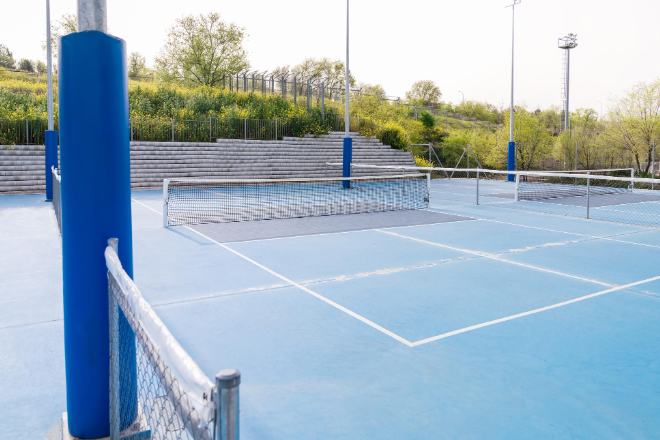
Color selection influences far more than appearance. The best pickleball court colors shape how clearly players track the ball, how comfortable the surface feels under sunlight, and how well the court holds its finish over time. A poorly chosen palette can reduce visibility, increase surface heat, and accelerate wear.
On the other hand, a well-planned color scheme creates a balanced playing environment that stays consistent across different lighting conditions.
Understanding how color interacts with performance, climate, and surface materials helps property owners make informed decisions before pickleball court construction or resurfacing begins.
Why Color Choice Directly Affects Gameplay
Pickleball depends on quick reactions and precise visual tracking. Players rely on clear sightlines to follow the ball, and even minor visibility issues can interfere with timing and accuracy.
High-contrast surfaces make it easier to track the ball during fast rallies. Since most outdoor pickleballs are bright yellow or neon green, the court color needs to create strong visual separation. When the surface color sits too close to the ball’s tone, players react more slowly, and gameplay becomes less predictable.
Line visibility is just as important. White boundary lines need to stand out clearly from the playing surface. When contrast is weak, players may struggle to judge in-bounds and out-of-bounds calls in real time.
Clear color contrast improves both performance and safety. Players move with more confidence when they can easily read the court.
Breaking Down Court Color Zones
A standard pickleball court includes multiple zones, and using different colors can improve clarity and visual organization.
The main playing area, including the non-volley zone, typically uses a dominant color that balances visibility with glare control.
The outer boundary area often uses a secondary color that contrasts with the main surface. This distinction helps players recognize court limits quickly during play.
Single-color courts exist, but multi-tone layouts tend to perform better. Two-tone or three-tone designs create stronger visual separation between zones, which supports smoother gameplay and a cleaner overall look.
Popular Color Combinations and Why They Work
Certain color combinations continue to stand out because they perform reliably across different environments. Blue and green remain one of the most common pairings. A blue playing surface combined with a green outer area creates a strong contrast against a yellow ball, making tracking easier.
All-green courts appear in parks and natural settings where blending with the surroundings matters. While visually appealing, this approach can reduce contrast if the ball color overlaps too closely.
Gray-based courts introduce a more neutral option. Light gray reflects more sunlight and helps control surface temperature, which makes it a practical choice in warmer climates. When paired with darker borders, gray courts maintain clear visual structure.
Bolder colors such as red or purple create a distinctive appearance, but they require careful planning. Without proper contrast against the ball and line markings, these colors can interfere with visibility.
How Climate Influences Color Performance
Outdoor courts face constant exposure to sunlight, moisture, and temperature changes, all of which affect how color performs over time.
Darker colors absorb more heat, which can raise surface temperature and impact player comfort. Lighter tones reflect sunlight and help keep the court cooler during peak hours.
UV exposure gradually fades pigments, especially in regions with intense sun. Selecting coatings designed to resist fading helps preserve color consistency.
Moisture also affects performance. After rainfall, darker surfaces may dry more quickly, but they can reveal imperfections such as low spots or uneven areas more clearly. Color selection should reflect these environmental factors to maintain performance throughout the year.
Balancing Aesthetics With Function
A visually appealing court adds value to residential and shared spaces, but design choices must align with performance needs. Matching court colors with surrounding architecture or landscape can create a cohesive look. However, aesthetics should not override visibility requirements.
Highly decorative schemes with multiple bold colors may look appealing initially, but can create confusion during gameplay. A controlled palette with clear contrast delivers better results.
Color should guide the eye rather than distract it. When players can quickly identify lines, zones, and ball movement, the court performs as intended.
Surface Type and Color Durability
Color performance depends on the surface system used during pickleball court construction or resurfacing. Acrylic coating systems allow for a wide range of color options while maintaining consistent texture. These coatings integrate pigments directly into the surface, which helps maintain color over time when applied correctly.
Modular tile systems offer pre-manufactured color options. These surfaces resist fading differently from coated systems and may respond better to certain weather conditions.
Each system interacts with color in its own way. Surface texture, material composition, and exposure levels all influence how color appears and how long it lasts.
When Color Changes Become Necessary
Over time, even well-installed courts begin to show signs of wear. Fading, discoloration, and uneven tones indicate that the surface requires attention.
This stage often leads to pickleball court resurfacing, where new coatings restore both color and texture. Resurfacing also allows property owners to update the color scheme based on improved understanding of visibility and performance needs.
Color changes during resurfacing offer an opportunity to correct earlier design choices. Adjusting contrast levels, selecting more heat-resistant tones, or refining zone separation can improve overall usability.
The Role of Maintenance in Preserving Court Colors
Consistent court maintenance plays a direct role in how well colors hold up over time.
Surface debris, algae growth, and dirt buildup can dull the color appearance and reduce traction. Routine cleaning keeps the surface clear and maintains visual clarity.
Drainage management prevents water accumulation, which can stain coatings and create uneven wear patterns. Addressing minor surface issues early reduces the need for extensive court repairs later.
Choosing Colors That Align With Long-Term Use
The best color choices consider long-term performance rather than short-term appearance. High-traffic courts benefit from colors that maintain contrast despite frequent use. Community courts require a clear visual structure to support players of all skill levels.
Residential courts may reflect personal style, but they still perform better when visibility remains the focus.
Color decisions also influence how often resurfacing becomes necessary. Durable, well-planned palettes retain clarity longer and reduce the need for frequent updates.
Choose the Right Court Colors with Confidence
With us, color selection goes beyond appearance. We evaluate how the court will be used, how sunlight affects visibility, and how surface materials respond over time. Our team brings over 15 years of combined experience to every pickleball court construction and resurfacing project, backed by a three-year paint guarantee and a one-year workmanship commitment.
Reach out to us to discuss your court and request a quote tailored to your space.