
How Professionals Fix Tennis Court Cracks That Keep Returning
Quick Summary
Tennis court cracks return because the pavement keeps moving, shrinking, and aging beneath the coating, so a filler alone cannot hold. Professionals map each crack, identify whether it is cosmetic, reflective, or structural, and match the repair to the cause, using resurfacer, patch binder, or flexible fabric systems under new color coats. Correct prep, temperature, and cure time decide how long a repair lasts, and structural cracks eventually point toward reconstruction rather than another patch.
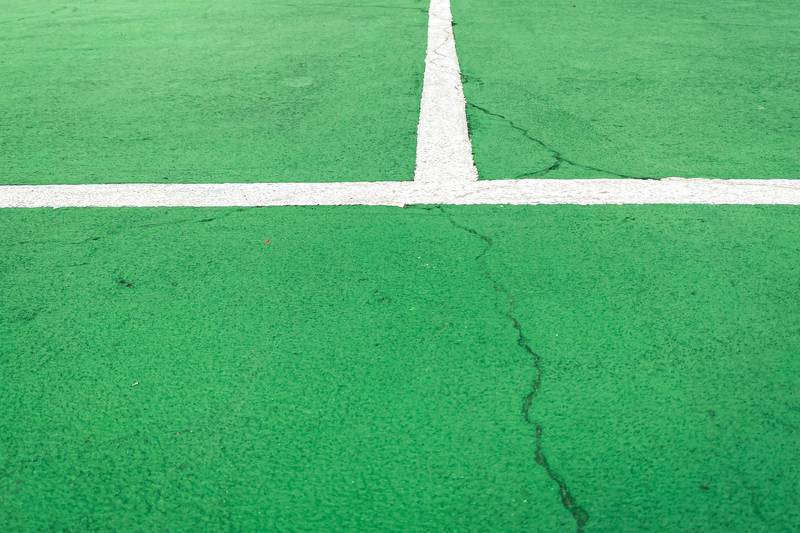
A court owner has patched the same line three times. You’ll hear the same frustration from any of them. The crack comes back, sometimes within a season, and the money spent feels wasted. Professionals who fix tennis court cracks for a living treat a returning crack as a message about what is happening underneath.
Reading that message correctly is the difference between a repair that lasts and one that repeats.
Why Cracks Keep Coming Back
Asphalt ages. In its position paper on cracking of asphalt courts, the American Sports Builders Association (ASBA) explains that as it weathers, oxidizes and loses flexibility, pavement shrinks. The paper also traces cracks to rolling patterns during construction, structural failures, movement below, stress around net posts and poor base preparation.
According to ASBA, every repair method, from fillers to fabric systems, extends a court’s life, but none of them ends the cycle. That is not a failure of workmanship. It is the nature of the material, and it shapes how professionals plan the work.
Diagnose Before You Fill
Experienced crews begin with a map. They record where each crack runs, how wide it is, whether the edges sit at different heights, and whether it opens and closes with the weather.
That survey sorts the cracks into groups. Hairline surface cracks are cosmetic, and they respond well to early treatment. Reflective cracks echo movement from below, like an old joint. Structural cracks signal subbase trouble, and ASBA’s maintenance guidance generally points those toward reconstruction.
The Repair Toolkit Professionals Choose From
No single product suits every crack, so the choice follows the diagnosis.
Resurfacer and filler come first. Manufacturer specifications direct cracks of 1/16 inch or less to acrylic resurfacer. According to one acrylic system specification, wider cracks call for patch binder, troweled in and ground flush once cured.
Reinforcement is next. Fiberglass mesh and self-adhesive fabric systems bridge hairline and moving cracks, which stay hidden beneath the color coats. Manufacturers say basic fillers buy you months to a couple of years, while fabric systems let the pavement move without reflecting through.
Deeper work comes last. ASBA also lists infrared patching and full-depth repairs. Overlays with geotextile membranes have shown some success, though ASBA’s resurfacing guidance cautions that no method for bridging expansive cracking is consistently successful short of removing the surface and correcting the cause.
Prep, Temperature, And Cure Time Decide Longevity
Repairs fail from rushed conditions more than from bad materials. Patch binder needs temperatures of at least 55°F, a dry substrate, and about 24 hours of cure before the coating system goes on. Thicker fills may need six hours or more just to dry.
Timing matters around the pavement too. Per its application procedure, manufacturer guidance allows 14 days for new asphalt and 28 days for new concrete before patching. Florida humidity and afternoon storms turn those windows into real scheduling puzzles, and cutting corners shows up within months as a ghost line.
When Repairs Stop Making Sense
Some cracks have outlived patching. Wide structural cracks, upheaval, and cracking that reappears after multiple repairs usually mean the base needs attention. At that stage, more money on coatings buys appearance, not performance. Our guide to resurfacing versus repairing a tennis court explains how to weigh that decision.
A Repair Backed By Specialists
Armor Courts is family-owned, with over 15 years of combined experience and an approved-applicator status that keeps us matched to each acrylic system’s requirements. First we diagnose, then we repair, and through our tennis court resurfacing service, our court repairs crews finish with fresh color. We back our work with a three-year guarantee on paint and a one-year guarantee on work.
Tired of chasing the same crack? Call us at 561-462-8963 or request a free customized estimate, and we’ll tell you what is moving and what it will take to stop it.
FAQs
Why do cracks come back after a repair?
The pavement beneath the coating keeps aging, shrinking, and shifting. ASBA states that cracks eventually reappear, or new ones form, whichever repair method is used. Fabric reinforcement slows the return, and a proper diagnosis tells you whether the base itself is the real problem, which saves you from paying for the same repair twice.
How long does a crack repair last?
It depends on the cause. Basic acrylic fillers can last months to a couple of years, while reinforced repairs on stable pavement often last longer. Structural movement shortens any repair. Before work begins, we explain the expected lifespan of each option, so your budget stays realistic and you get no surprises later.
Does crack repair require resurfacing the whole court?
Not always, but repairs show through if the court is not recoated. Patches leave visible marks, so most projects finish with new color coats over the whole surface. That unified finish also seals the repair and protects it from sun and moisture, giving the court one clean look from fence to fence.