
June 1, 2026
A Guide To Designing A Safe Multipurpose Court For Your Kids
Quick Summary
Designing a kid-friendly multipurpose court requires careful attention to layout, surfacing, and equipment placement to keep play safe and organized. A balanced design allows children to switch between different sports while maintaining clear boundaries and smooth movement across the court. Safe surfacing, proper lighting, and protective perimeter features reduce injury risks and improve usability throughout the year. With thoughtful planning, multipurpose courts become long-term spaces that support active play, skill development, and family recreation.
Designing a kid-friendly multipurpose court begins with understanding how space, safety, and versatility work together in a backyard environment. A well-planned layout allows children of different ages to enjoy active play while reducing risks linked to fast movement and changing sports. This guide explains how thoughtful design choices create long-lasting multipurpose courts that grow with your family.
Planning a Kid-Friendly Multi-Athletic Court Layout
A strong layout forms the foundation of a safe playing environment for children of different ages and skill levels. Proper spacing allows movement across basketball, volleyball, and soccer activities without unnecessary crowding or overlap. Early planning also shapes long-term usability as interests evolve.
During the design stage, many families begin considering multipurpose court construction to match available yard space with long-term athletic needs. This stage involves mapping boundaries, entry points, and open zones where children can move freely. A balanced layout reduces congestion and encourages smooth transitions between games.
A clear layout also helps define zones for different sports without creating confusion during play. Marking areas with intentional spacing allows children to understand boundaries quickly. This approach keeps games organized while maintaining flexibility for multiple activities.
Choosing Safe Surfacing for a Kid-Friendly Multi-Athletic Court
Surface selection plays a major role in injury prevention and comfort during active play. Shock-absorbing materials help reduce strain on joints during jumping, running, and sudden stops. Smooth but textured finishes improve grip without limiting movement.
Interlocking sport tiles are commonly used for multipurpose court surfaces because they offer traction and drainage benefits. These materials also help reduce slips during wet conditions. Consistent surface quality supports safer play across different sports.
Drainage design also matters because standing water can create hazards. A slightly graded base allows water to move away from the court surface. This keeps the area usable after rainfall and reduces maintenance concerns.
Designing Equipment Placement for Multi-Athletic Courts
Equipment placement shapes how safely children interact with the court during games. Adjustable basketball hoops allow different age groups to play without strain or unsafe jumping attempts. Net systems for volleyball or badminton should sit at stable, well-anchored points.
Padding around poles and support structures reduces impact risk during fast movement. Fencing placed at a safe distance prevents collisions while still containing the ball within play zones. Each placement decision affects how smoothly games flow.
Storage areas for balls and gear also matter in daily use. Organized storage reduces clutter near active zones and prevents tripping hazards. Easy access encourages responsibility among children using the court.
Creating Clear Markings on a Kid-Friendly Multi-Athletic Court
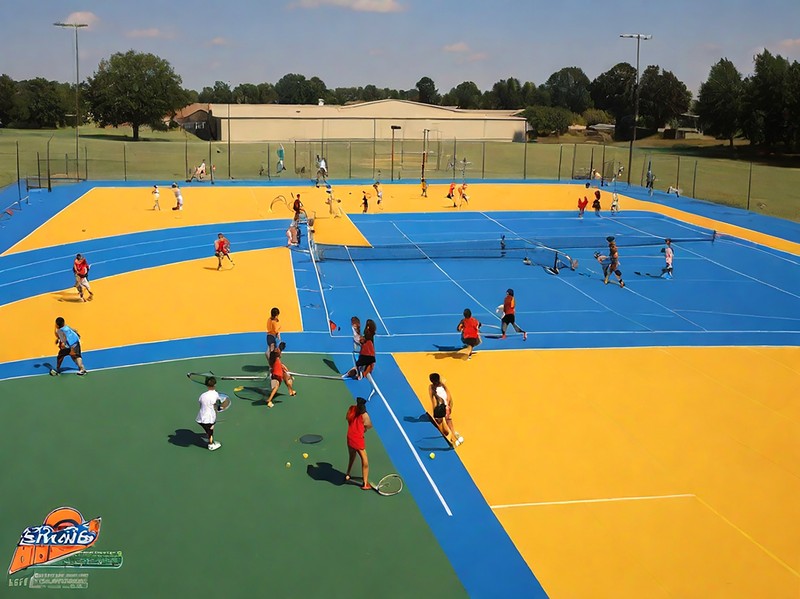
Court markings guide gameplay and reduce confusion when switching between sports. Color-coded lines help children distinguish between basketball, tennis, and soccer zones. Simple layouts improve readability during fast-paced activity.
Durable paint or embedded line systems maintain visibility over time. Fading lines can create confusion and interrupt gameplay flow. Long-lasting markings reduce the need for frequent resurfacing work.
Spacing between markings also affects how easily children adapt to different sports. Overlapping lines should be minimized where possible to avoid visual clutter. A clean layout helps players focus on movement rather than orientation.
Ensuring Safe Boundaries for a Kid-Friendly Multi-Athletic Court
Children need clearly defined boundaries to move safely during fast-paced games. A secure perimeter helps prevent accidental exits from the playing area and keeps balls contained within the court space. Fence height and spacing should match the sports being played most often.
Rounded edges and padded boundary zones reduce impact risks during sudden stops or collisions. These protective elements are especially helpful in high-energy play environments involving multiple sports. Thoughtful boundary design adds another layer of safety without limiting movement.
Gate placement also affects how safely children enter and exit the court. Gates should open away from the playing surface to prevent accidental interference during games. Easy access points encourage organized play and reduce unnecessary movement through active zones.
Lighting and Visibility for Safer Multi-Athletic Courts
Proper lighting extends playtime and improves safety during low-light conditions. Even illumination across the entire surface reduces shadows that can hide obstacles. LED lighting systems are commonly used for consistent brightness.
Light placement should avoid glare that can interfere with visibility during fast movement. Angled fixtures help distribute light evenly across the court surface. This allows children to track the ball and other players more easily.
Visibility also depends on the surrounding environmental design. Removing tall obstructions near the court prevents dark zones from forming. A well-lit environment supports safer evening activity.
Building a Long-Term Family Play Environment
A well-designed multipurpose court grows with a family’s changing needs over time. Flexible layouts allow new sports to be introduced without major reconstruction. This adaptability increases long-term value and daily use.
Durable materials reduce the need for frequent repairs and maintain play quality. Weather-resistant surfaces handle seasonal changes without major degradation. Thoughtful planning supports consistent performance across years of use.
We at Armor Courts focus on building durable multipurpose courts designed for family enjoyment and long-term performance. Our team brings over 15 years of experience in athletic court construction and resurfacing with dependable craftsmanship. Each project reflects a balance of safety, function, and long-term value.
Design Choices That Shape Safer Play Spaces
Strong design decisions influence how safely children interact with their environment during play. Layout, surfacing, equipment, and lighting all work together to reduce risk and improve usability. Each element contributes to a smoother and more controlled play experience.
A well-planned court also encourages active lifestyles by making sports more accessible at home. Children are more likely to engage in physical activity when the space feels organized and inviting. Thoughtful design supports both safety and enjoyment.
Consistent maintenance planning keeps the court in good condition over time. Regular checks on surfaces and equipment help maintain safe conditions for daily use. This approach extends the life of the court while preserving play quality.
Start Your Backyard Project with Confidence
We design and construct durable multipurpose courts that match your family’s space, safety needs, and long-term play goals. Learn more about our athletic court construction and resurfacing services, and contact us to start your project today.
FAQs
Modular sport tiles are commonly recommended because they offer shock absorption, traction, and drainage. These features help reduce slips and joint strain during active play. They also perform well in different weather conditions, making them suitable for long-term backyard use.
Space requirements depend on the sports included, but many backyard courts fit within a medium-sized yard. A flexible layout can prioritize key sports like basketball while still allowing space for other activities. Proper planning helps maximize available area without overcrowding.
Yes, if proper lighting is installed. LED lighting systems improve visibility across the entire surface and reduce shadows that can hide obstacles. Well-placed fixtures help players track movement and maintain safer gameplay during low-light conditions.
Adjustable equipment, clear markings, and padded boundaries help accommodate different age groups. Lower hoop settings and simplified rules for younger children improve accessibility. As children grow, the same court can adapt to higher skill levels without major redesign.