
Armor Courts
Tennis Court Resurfacing | Athletic Court Construction | Court Contractors/Builders

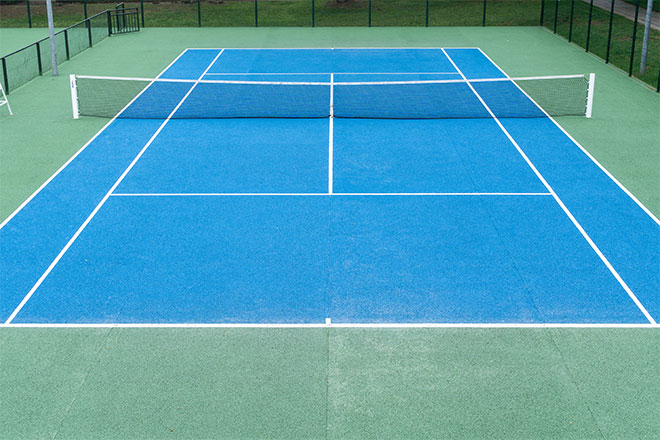
Choosing the right surface affects tennis court construction, gameplay, durability, and maintenance over time. Various tennis court surface types affect ball speed, bounce consistency, and overall player comfort, which directly shape how the court performs over time.
A clear understanding of tennis court surface types makes it easier for property owners and facility managers to match a surface with usage frequency, budget requirements, and long-term goals.
Acrylic Hard Courts among Tennis Court Surface Types
Acrylic hard courts remain one of the most popular among tennis court surface types due to their consistent performance and durability. This surface consists of multiple acrylic coating layers applied over concrete or asphalt. The finished result delivers reliable ball bounce and predictable gameplay across recreational and competitive settings.
These courts also require less maintenance compared to natural surfaces. Acrylic coatings resist weather damage and fading, helping preserve the court’s appearance over time. Many facilities choose this surface because it balances durability, performance, and long-term value for both private and public installations.
Asphalt-Based Tennis Court Surface Types and Performance
Asphalt creates a stable and cost-conscious foundation for many tennis courts. It forms a solid base for acrylic coatings and contributes to steady ball response during play. Schools, parks, and residential properties frequently choose asphalt within broader tennis court surface types due to its affordability and practical performance.
Surface cracks may develop over time from temperature shifts and soil movement. Periodic resurfacing restores smoothness and keeps play conditions consistent. With proper care, asphalt-based courts maintain dependable performance for years.
Concrete Tennis Court Surface Types and Durability
Concrete courts deliver impressive structural strength and extended lifespan. This rigid base maintains integrity under heavy and frequent use. Facilities often select concrete foundations within tennis court surface types because they resist shifting and remain stable across changing climates.
The firmness of concrete can feel harder underfoot than cushioned alternatives. Extended matches may increase joint impact. Adding cushioned acrylic coatings improves comfort while preserving the structural benefits associated with concrete construction.
Natural Clay Tennis Court Surface Types and Gameplay
Natural clay courts create slower gameplay and higher ball bounce. This surface consists of crushed stone materials that allow players to slide and adjust movement. Many players prefer clay because it promotes longer rallies and more strategic shot placement during matches.
Clay courts require frequent maintenance to preserve proper play conditions. Regular watering, brushing, and rolling help maintain surface consistency and prevent uneven areas. Facilities that commit to proper upkeep can enjoy excellent playing conditions and a traditional tennis experience.
Artificial Clay Tennis Court Surface Types and Maintenance
Artificial clay courts replicate the feel of natural clay while reducing maintenance demands. These systems use synthetic materials combined with sand or specialized infill to create consistent performance. Players experience similar ball response and movement without the intensive upkeep required by natural clay.
This surface offers improved durability compared to traditional clay courts. Artificial clay maintains consistent playing conditions even with frequent use. Many facilities choose this option to combine clay-like performance with lower maintenance requirements and longer surface lifespan.
Natural Grass Tennis Court Surface Types and Speed
Natural grass courts deliver fast gameplay and lower ball bounce. This surface creates quick rallies and favors players with aggressive playing styles. Grass courts offer a unique playing experience that differs significantly from harder or slower court surfaces.
Grass courts require ongoing maintenance to preserve quality. Regular mowing, watering, and surface care help maintain smooth play conditions. Facilities that invest in proper care can maintain visually appealing courts that deliver distinctive performance characteristics.
Artificial Grass Tennis Court Surface Types and Longevity
Artificial grass courts offer the appearance and feel of natural grass while improving durability. Synthetic turf materials resist wear and maintain consistent performance over time. This surface remains popular for recreational courts due to its reliable play characteristics and reduced maintenance requirements.
Artificial grass handles weather conditions better than natural grass. It drains efficiently and returns to play faster after rain. Many residential and commercial facilities select this for its combination of comfort, durability, and reduced maintenance demands.
Modular Tile Tennis Court Surface Types and Installation
Modular tile courts use interlocking plastic components installed over a prepared base. These tiles create a uniform surface with dependable bounce and traction. Installation moves quickly, and design customization remains flexible to meet specific layout preferences.
Maintenance remains straightforward. Damaged tiles can be replaced individually without disturbing the full court. Facilities that need adaptable solutions often choose modular systems for their practical installation process and reliable long-term performance.
Cushioned Tennis Court Surface Types and Player Comfort
Cushioned court systems incorporate additional layers engineered to reduce impact. These surfaces improve comfort during extended matches and decrease stress on joints. Many players favor cushioned systems for their balance of play quality and physical comfort.
Ball response remains consistent despite the added cushioning. These coatings can be installed over asphalt or concrete foundations. Facilities focused on comfort and durability frequently select cushioned options for both recreational and competitive environments.
Carpet Tennis Court Surface Types and Indoor Use
Carpet courts consist of synthetic textile materials secured over a firm base. This surface generates quick play and consistent bounce, making it well-suited for indoor facilities. Controlled indoor environments help maintain predictable performance year-round.
Maintenance needs stay relatively low compared to natural surfaces. Carpet systems retain their structure and play characteristics with proper care. Indoor tennis centers often install this type to create stable and weather-independent conditions.
Choosing the Right Tennis Court Surface for Long-Term Performance
Selecting the ideal court depends on financial planning, maintenance expectations, and the intended level of play. Hard courts emphasize durability and consistent bounce. Clay and grass highlight distinctive gameplay features. Artificial and modular systems introduce flexibility and lower maintenance demands across many tennis court surface types.
Collaboration with experienced professionals helps identify the most appropriate solution for site conditions and usage goals. Proper installation and timely resurfacing protect performance and extend lifespan. A well-chosen surface establishes a dependable playing environment that aligns with both operational and performance priorities.
Work with Armor Courts for Professional Tennis Court Solutions
At Armor Courts, we specialize in tennis court construction and resurfacing that delivers reliable performance and long-term durability. Contact us today to request a quote and learn how our experienced team can help you select and install the right tennis court surface for your property.