
Armor Courts
Tennis Court Resurfacing | Athletic Court Construction | Court Contractors/Builders

Tennis Court Construction: Step-By-Step Breakdown
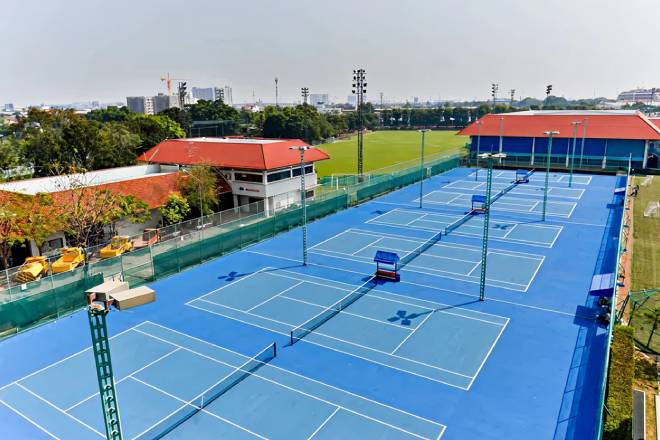
The process of tennis court construction involves far more than laying a surface and painting the lines. Many clients reach out to us because they want clarity on tennis court installation or want to understand how to build a tennis court that performs well for years. We walk them through every stage with honest guidance and dependable workmanship. A court is only as strong as the planning behind it, which is why we place great attention on each detail from site preparation to the final coat of paint.
Building a court calls for careful sequencing. Each decision influences the next stage, and each stage affects long-term quality. Our family-owned business approaches this work with over 15 years of combined experience. The steps below reflect the process we follow when we help property owners, schools and recreational spaces transform open land into well-constructed courts designed for steady performance and predictable longevity.
Evaluating the Site Before Any Work Begins
We start with a full inspection of the proposed location. This early step helps us understand the soil, drainage patterns and layout of the land. Any court that rests on unstable ground will face issues in the future. The goal here is simple. We gather enough information to build a stable base that will support the court for many seasons.
The slope of the site must guide water away from play areas to avoid future problems. We account for natural water pathways and plan grading that directs moisture toward approved drainage areas. We also check whether heavy equipment can safely reach the site. These early assessments shape the entire project, so we take our time and approach them with care.
Laying Out the Court and Preparing the Ground
Once the site is approved, we start marking the boundaries. The standard dimensions leave little room for guesswork. We create enough clearance around the court so players have space to move. We determine the orientation of the court by tracking sunlight and shadows. A good layout reduces glare for players during peak daylight hours. This planning stage pairs technical accuracy with practical experience.
After marking the space, we move to excavation. The topsoil is removed to reach a stable layer that can support the base. Weak soil is replaced with stronger, compacted material. This gives us a stable foundation, which is the heart of a well-built court. Without this firm base, no amount of surface work will hold up over time.
Building the Sub-Base That Supports the Court
A dependable sub-base prevents cracks, uneven areas and water issues. We build this layer using a mix of compacted stone that forms a solid and predictable structure. The sub-base must be level within strict tolerances. We check the grade repeatedly, making small adjustments until the surface meets the correct slope.
A well-built sub-base spreads out the weight placed upon the court, increases stability and helps the surface stay smooth. This is one of the reasons our team focuses so much effort on this stage. When the foundation is strong, the remaining steps progress smoothly.
Choosing the Right Base Material
Clients often want to know which base material will work best for their space. Asphalt and concrete remain the two most common choices. Each one supports consistent play. Our team discusses the options, then we install the base layer that fits the long-term goals of the project.
Asphalt works well in many climates and remains a cost-effective base. Concrete offers strength and structural reliability. Regardless of which one fits the project, our team installs the base with careful grading and compaction to reduce future surface variations. We allow enough curing time so the material settles properly before any coatings are applied.
Adding the Surface Layers
After the base has set, we move to the surfacing system. Acrylic coatings add the texture, color and play characteristics that players expect. These coatings also protect the base from weather and daily wear. We apply multiple layers in a sequence that improves durability and playability.
The texture of the surface can be adjusted to match different levels of play. Schools and recreational spaces often prefer balanced surfaces that offer good traction without slowing down the game. We guide clients through these choices, then apply each layer with precision. We work carefully to avoid streaks and uneven areas.
Painting the Lines and Markings
Once the surface cures, we add the lines that define the game. Accurate measurements are vital. Our team maps each section with string and chalk before applying any paint. These lines must stay clear and visible for many years, so we use coatings that bond well with acrylic surfaces.
Good line work improves play by guiding movement and reducing disputes during matches. Court markings might look simple, yet they require the same level of attention as every other stage of construction. Clean lines give the court a polished, professional appearance.
Installing Accessories and Final Features
Accessories complete the playing environment. Posts, nets and fencing are installed after the court surface is ready for use. Lighting may be added at this phase based on the client’s needs. We position each component for convenience and safety, then secure them with hardware designed for long-term outdoor use.
This step also includes optional upgrades such as windscreens or ball containment features. These additions support better gameplay and keep the court comfortable for users.
Final Inspection and Project Handoff
Before we consider the court finished, we walk the space, check the slope, inspect the surface and confirm that each line is placed correctly. We review the installation of nets, posts and any accessories. We look for early signs of imperfections or small details that could improve the final result.
Once everything meets our standards, we share maintenance guidelines with the client. These recommendations help preserve the quality of the court. With correct care, a new surface delivers reliable seasonal performance.
Why the Right Builder Matters
The steps described above look straightforward on paper. In reality, the smallest mistake can lead to long-term issues. A poorly graded sub-base can result in puddles. Rushed curing can weaken the surface. Incorrect line measurements can affect gameplay.
This is why experience matters so much in tennis court installation. Our family-owned business relies on more than 15 years of combined experience in the construction and resurfacing of athletic courts. We have completed projects across tennis facilities, school campuses and recreational spaces. Our guarantee on workmanship reflects the confidence we have in our process and our materials.
A Quick Look at Long-Term Care
Once a court is built, seasonal maintenance helps preserve its condition. Regular cleaning keeps debris off the surface. Controlling standing water prevents early damage. Prompt repairs stop small issues from expanding. Our team offers repair and resurfacing services when courts begin showing signs of wear, which is a natural part of the court’s life cycle.
The lifespan of a court depends on weather patterns, volume of play and the quality of the installation. A strong build lays the groundwork for predictable performance for many years.
A Court Built with Experience and Care
Creating a dependable tennis court calls for planning, precision and a strong understanding of the surfaces athletes depend on. Each stage builds upon the last, and the quality of the work shapes the long-term performance of the court. We approach court construction with the same commitment to detail that has guided our work for more than a decade. Our family-owned business builds, resurfaces and maintains athletic courts with care backed by a three-year guarantee on paint and a one-year guarantee on workmanship. If you want a court that delivers steady performance and lasting value, you can count on our experience at Armor Courts.
Hard Court Guide Download
Download a free copy of our Hard Court Maintenance & Repair guide
Free