
How To Prepare A Basketball Court For Professional Resurfacing
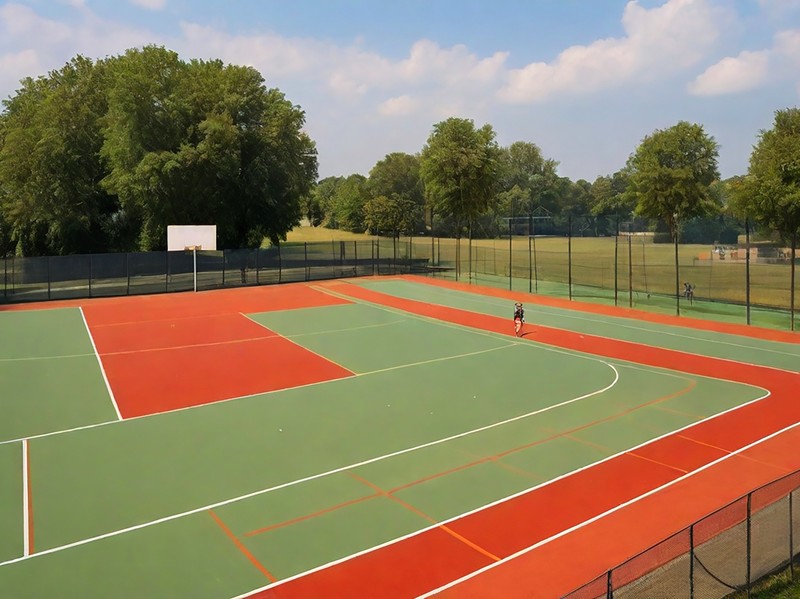
Quick Summary
Preparing a basketball court for professional resurfacing involves assessing existing damage, clearing the area, deep cleaning to remove algae and debris, repairing cracks with flexible fillers, correcting drainage issues, confirming court dimensions, and scheduling around stable weather conditions. Skipping any of these steps risks premature coating failure, trapped moisture, or recurring cracks that undermine the final result. Thorough preparation protects the resurfacing investment and helps the finished surface deliver consistent bounce, safe footing, and long-term durability, particularly important in South Florida’s humid, rain-prone climate.
Knowing how to resurface a basketball court starts long before the first coat of acrylic goes down. Proper preparation determines whether a resurfacing project delivers the smooth, long-lasting finish property owners expect, or fails prematurely due to trapped moisture, unresolved cracking, or inadequate cleaning.
Assessing the Current Condition
Before any preparation begins, the court should be evaluated for cracking, fading, drainage issues, and surface texture loss. Courts with minor wear may only need cleaning and light repair, while courts with significant cracking or base movement may require more extensive court repairs before resurfacing can proceed.
This assessment also identifies whether the existing striping and color coating have degraded enough to warrant a full resurfacing rather than a simple recoat.
Clearing the Area
The court and surrounding area should be cleared of any furniture, sports equipment, portable hoops, or debris that could interfere with cleaning and repair work. If the court has fencing or gates, confirming clear access for equipment and materials helps the project move efficiently once work begins.
Deep Cleaning the Surface
A thorough pressure washing removes dirt, algae, mildew, and loose surface material that would otherwise prevent proper adhesion of repair compounds and new coatings.
In South Florida’s humid climate, algae growth is common on outdoor courts, particularly in shaded areas, and this buildup must be fully removed before any resurfacing work begins.
Repairing Cracks and Surface Damage
Every crack, no matter how small, should be addressed before resurfacing. Hairline cracks left untreated tend to reappear through new coatings within a short period, undermining the entire project.
Our team uses flexible filler materials designed to accommodate temperature-driven expansion and contraction, which is particularly important given Florida’s swings between intense heat and heavy rain.
Addressing Drainage and Leveling Issues
Areas where water pools after rain, sometimes called birdbaths, need to be identified and corrected through patching or leveling compounds. Proper drainage is essential not only for player safety but also for the long-term performance of the new surface, since standing water accelerates wear and can lead to further cracking over time.
Reviewing Line Placement and Court Dimensions
Before new striping is applied, it is worth confirming that court dimensions and key measurements meet the intended use, whether that is recreational play, school athletics, or organized league competition.
This is also a good opportunity to revisit any planned upgrades, such as combining the layout with multi-sport court construction elements if the property wants to maximize the space for more than one activity.
Confirming Weather and Scheduling Windows
Resurfacing work depends on stable, dry weather for both application and curing. In South Florida, this often means scheduling around the rainy season to avoid delays. Our team monitors forecasts closely and communicates with clients about timing to minimize disruption and give the coating time to cure properly before the court reopens for use.
Coordinating Hoop and Pole Repairs During Preparation
If basketball poles are loose, corroded, or improperly anchored, preparation is the right time to address these issues rather than waiting until after the new surface is applied. Reinforcing or replacing anchoring hardware before resurfacing prevents the need to disturb the finished surface later, which can leave visible patches around the pole bases.
Why Preparation Matters for Long-Term Durability
Property owners sometimes underestimate how much preparation affects the final result. A rushed cleaning or an ignored hairline crack can undermine even the highest-quality acrylic coating system. Investing the time to prepare a basketball court properly protects the resurfacing investment and helps the finished surface perform well for years, rather than showing signs of failure within a single season.
Armor Courts brings over fifteen years of combined experience to every resurfacing project, and we back our work with a three-year guarantee on paint and a one-year guarantee on workmanship.
Explore our basketball court construction services to see how preparation fits into our broader approach to building and maintaining high-performing courts.
Ready to prepare your basketball court for professional resurfacing? Contact Armor Courts today for a free consultation.
Frequently Asked Questions
How long does basketball court preparation take before resurfacing begins?
Preparation time varies based on court condition, but most projects require one to two days of cleaning and repair before resurfacing can start.
Can I resurface a basketball court myself?
While DIY kits exist, professional preparation and application typically produce a more durable, longer-lasting result due to proper technique and materials.
What happens if cracks are not repaired before resurfacing?
Unrepaired cracks almost always reappear through new coatings within a short time, undermining the appearance and durability of the resurfacing project.