
11 Must-Have Basketball Court Accessories For Commercial Facilities
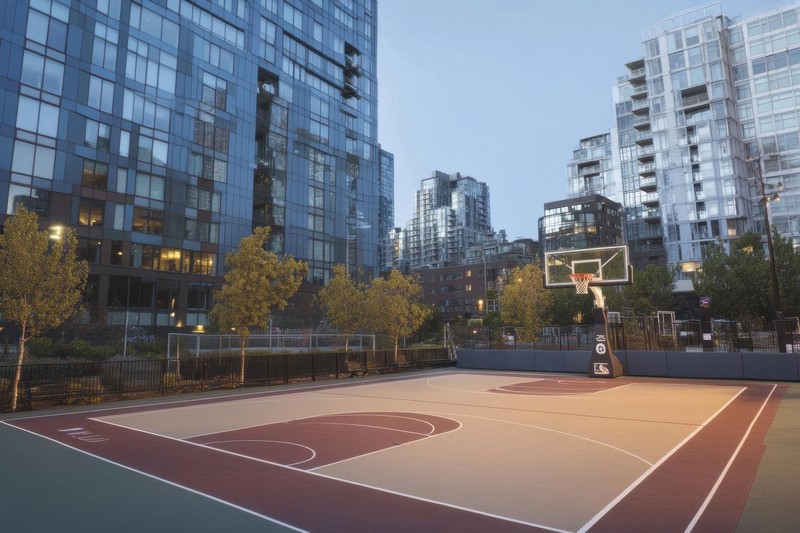
Quick Summary
Commercial basketball courts perform best when the surface is paired with the right accessories, including adjustable systems, break-away rims, durable backboards, pole padding, slip-resistant coatings, accurate striping, scoreboards, fencing, lighting, seating, and shade structures. These additions improve safety, extend usability into evening hours, support organized play, and reduce long-term maintenance costs. Facilities such as schools, homeowners associations, municipalities, and multi-family properties benefit most when accessories are planned alongside the court surface rather than added afterward, since retrofitting safety features later is typically more costly than including them during the original construction phase.
Choosing the right basketball court accessories is just as important as the surface itself when a commercial property wants a court that performs well and lasts for years. Property managers, schools, homeowners associations, and municipalities often focus their budget entirely on the playing surface, only to discover later that missing accessories shorten the life of the court or create liability concerns.
The right combination of hardware, safety features, and finishing touches determines whether a court feels professional or feels unfinished.
1. Adjustable Basketball Systems
Fixed-height hoops work for casual residential use, but commercial facilities benefit from adjustable systems that accommodate players of different ages and skill levels. Adjustable systems are particularly valuable for schools, worship centers, and multi-family communities where children and adults share the same space throughout the day.
2. Break-Away Rims
Break-away rims flex slightly under pressure and then return to position, reducing stress on the backboard and pole during aggressive play. For high-traffic commercial courts, this accessory reduces maintenance calls and extends the life of the entire basketball system.
3. Tempered Glass or Polycarbonate Backboards
Backboard material affects ball response, durability, and appearance. Tempered glass offers the truest bounce and a professional look, while polycarbonate is a durable, cost-effective alternative for facilities that want reliable performance without the premium price tag.
4. Padded Pole Covers
Pole padding is a simple accessory with an outsized impact on safety. For facilities open to the public, padded covers around the base of the basketball pole help reduce injury risk during fast-paced games, and some insurance carriers or local codes may require them.
5. Slip-Resistant Surface Coatings
An acrylic surface coating with proper texture reduces slipping, even when courts are wet from Florida’s frequent afternoon storms. This accessory works hand in hand with a properly cured surface to keep players safe during extended play sessions.
6. Court Line Striping and Zone Markings
Clear, properly measured striping is not just cosmetic. Accurate free-throw lines, three-point arcs, and key markings allow for organized league play and reduce disputes during pickup games. Commercial facilities hosting tournaments or community leagues should never overlook this detail.
7. Shot Clocks and Scoreboards
For facilities running organized programs, a scoreboard or shot clock turns a recreational amenity into a genuine athletic asset. These accessories are common additions for schools and community centers that host regular games.
8. Perimeter Fencing
Fencing protects the court from stray balls entering nearby parking lots or walkways, and it also defines the space for liability purposes. Many homeowners associations and municipalities require fencing around commercial courts as part of their safety planning.
9. Court Lighting
Extending playable hours matters for busy commercial properties. LED court lighting allows residents, students, or league members to use the space safely into the evening, which increases usage and return on investment for the property.
10. Storage Benches and Seating
Simple amenities like built-in benches or seating areas encourage longer visits and give spectators a comfortable place to watch games. These additions are especially popular in multi-family communities and worship centers looking to create a gathering space.
11. Shade Structures
South Florida heat makes shade structures a practical accessory rather than a luxury. Pergolas or shade sails near the court give players and spectators relief from direct sun, which is particularly appreciated during summer tournaments and youth programs.
Why Accessories Matter as Much as the Surface
A basketball court is a system, not just a slab of asphalt or concrete with paint on top. The surface material determines how the ball bounces and how comfortable players feel on their joints, but the accessories determine how safely and how long that surface performs.
When Armor Courts approaches a commercial basketball court project, our design and estimating team walks through these accessory decisions with the client early, because retrofitting fencing, lighting, or padding after the surface is complete is far more expensive than including it in the original scope.
For facilities weighing broader upgrades, exploring modular sports flooring alongside accessory planning can also improve shock absorption and player comfort across the entire court.
Planning Your Commercial Basketball Court Project
If your facility is planning a new court or upgrading an aging one, it helps to think beyond the surface color and dimensions. Consider how the court will be used, who will use it, and what hours it needs to stay active. A youth-focused community center has different accessory priorities than a country club hosting adult leagues, and a school will have different safety requirements than a multi-family property.
Armor Courts has worked with schools, homeowners associations, municipalities, and worship centers throughout South Florida, and our completed projects reflect a wide range of accessory configurations tailored to each client’s needs. We are also happy to walk clients through our court designer tool to visualize how different accessories will look on a finished surface before basketball court construction even begins.
Facilities managing several sports on one property sometimes find it more efficient to plan accessories as part of a broader multi-sport court construction project, since shared fencing, lighting, and seating can serve more than one playing surface at once, reducing overall cost per court.
Working With a Trusted Contractor
Armor Courts is a family-owned business with over fifteen years of combined experience serving commercial and residential clients throughout Florida, and we back our work with a three-year guarantee on paint and a one-year guarantee on workmanship, giving facility managers peace of mind long after installation day.
Whether your facility needs a full court build or targeted upgrades to an existing space, our team can help identify which accessories will deliver the most value for your specific situation, budget, and player population.
Ready to upgrade your commercial basketball court with the accessories that matter most? Contact our team today to schedule a free consultation and receive a detailed estimate.
Frequently Asked Questions
What accessories are required by law for commercial basketball courts?
Requirements vary by municipality, but pole padding, proper fencing, and adequate lighting are commonly recommended or required for facilities open to the public, particularly schools and community centers.
Do break-away rims really make a difference on commercial courts?
Yes. Break-away rims absorb impact from aggressive dunking or hanging on the rim, which protects the backboard, pole, and anchoring system from repeated stress that leads to premature failure.
How much do basketball court accessories typically cost?
Costs vary widely depending on the accessory and the quality tier selected. Basic padding and striping are relatively affordable, while lighting systems, scoreboards, and shade structures represent a larger investment.