
7 Basketball Court Construction Mistakes You Need To Avoid
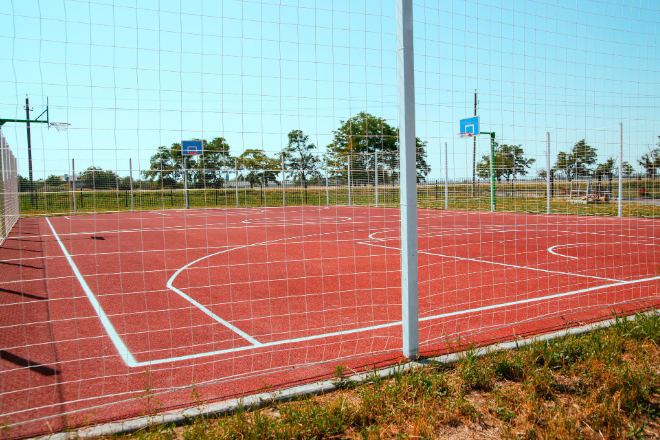
Building a basketball court is a serious investment that goes far beyond appearance. It directly impacts playability, safety, and long-term maintenance needs. Many property owners focus heavily on surface color or upfront cost, while overlooking the technical details that determine how the court performs over time.
That is where most basketball court mistakes begin. Small decisions made early in the process can lead to larger issues down the line, from surface failure to constant repairs. With the right planning and execution, these problems can be avoided, and the result is a court that delivers consistent performance for years.
Basketball court construction requires careful planning, precise execution, and the right materials to achieve lasting performance.
Poor Site Preparation and Base Installation
One of the most common basketball court mistakes starts beneath the surface. The base is the foundation of the entire court, and any weakness at this level eventually affects everything above it. If the ground is not properly graded, compacted, and stabilized, the surface will not remain consistent.
Improper base preparation often leads to cracking, uneven areas, and water retention. These issues may not appear right away, which makes them more difficult to detect early. Over time, with regular use and exposure to weather, the damage becomes more visible and more expensive to correct.
Careful evaluation of soil conditions and proper compaction before any surface work begins helps create a stable foundation. A strong base brings stability across the entire court and reduces long-term structural problems. Skipping or rushing this stage remains one of the most preventable basketball court mistakes.
Ignoring Proper Drainage Planning
Water is one of the most damaging forces for any outdoor court. Without proper drainage, even a well-constructed surface will degrade faster than expected. Many basketball court mistakes are directly tied to poor water management.
A court should never be perfectly flat. A slight slope is required to direct water off the surface and prevent pooling. Standing water weakens coatings, reduces traction, and increases the risk of surface deterioration.
Drainage design should be part of the project from the beginning. This includes analyzing the surrounding terrain and understanding how water moves during heavy rainfall. Proper drainage protects the structure of the court and maintains safe playing conditions over time.
Drainage systems also need to account for long-term seasonal changes, not just single storm events. Poor grading or missing runoff channels can lead to hidden water buildup under the surface. This gradually weakens the foundation and shortens the overall lifespan of the court.
Choosing the Wrong Surface System
Selecting the correct surface system is one of the most important decisions in the entire build process. Not all materials perform the same, and choosing based only on cost often leads to performance issues.
Some surfaces break down quickly under heavy use. Others do not provide enough traction for safe movement. These basketball court mistakes impact both durability and player experience, often resulting in earlier resurfacing or unexpected repair work.
Surface selection should be based on usage level, location, and long-term expectations. A properly matched surface improves gameplay and withstands consistent activity more effectively.
Climate compatibility and maintenance demands should also be considered during selection. A surface that performs well in one environment may fail faster in another if it is not suited for heat, moisture, or temperature shifts.
Overlooking Climate and Weather Conditions
Outdoor courts are exposed to constant environmental stress. Heat, humidity, and rain all impact how materials behave over time. Ignoring these factors is another one of the common basketball court mistakes that can shorten the life of a court.
In areas with intense sun exposure, surfaces can fade or break down if the wrong coatings are used. In regions with heavy rainfall, moisture can seep into small imperfections and cause further damage. Temperature changes also lead to expansion and contraction, which can create stress on the surface.
Local climate conditions must be factored into material selection and installation planning. This helps reduce weather-related deterioration and keeps the court performing reliably throughout the year.
Inaccurate Court Dimensions and Layout
Precision is essential when building a basketball court. Even small measurement errors can impact gameplay and overall usability. This is one of those basketball court mistakes that may not be obvious at first, but becomes clear during use.
Incorrect spacing can disrupt movement, while misaligned markings affect game flow and court balance. These issues often reduce the professional feel of the playing surface.
Established standards should be followed, and all measurements verified throughout construction. Whether building regulation-size courts or custom layouts, accuracy remains a top priority for consistent performance.
Skipping Professional Installation
Attempting to cut costs during installation often leads to bigger expenses later. Hiring inexperienced contractors or trying to manage parts of the project without the right expertise is one of the more costly basketball court mistakes.
Professional installation involves more than placing materials on a surface. It requires knowledge of layering systems, proper timing, and correct application methods. Each step must be handled with care to achieve a consistent finish.
Neglecting Maintenance Planning
Even a well-constructed court needs regular care to stay in top condition. Ignoring court maintenance is one of the most overlooked basketball court mistakes, and it often leads to preventable damage.
Over time, dirt buildup, small cracks, and surface wear can affect how the court looks and feels. If these issues are not addressed early, they can develop into larger problems that require more extensive repairs.
Consistent maintenance should be part of long-term court care. Routine cleaning and early surface repairs help preserve performance and extend usability.
Building a basketball court requires careful planning, technical skill, and attention to detail at every stage. Each decision impacts how the court performs over time. Avoiding these basketball court mistakes helps protect the investment and creates a surface that remains reliable under daily use.
At Armor Courts, we approach every project with a focus on durability, performance, and long-term value. From construction to resurfacing, we work closely with our clients to create courts that meet their goals and hold up under daily use.
If you are ready to move forward with your project, call Armor Courts or request a free quote today to get started.