
Armor Courts
Tennis Court Resurfacing | Sport Court Construction | Court Contractors/Builders

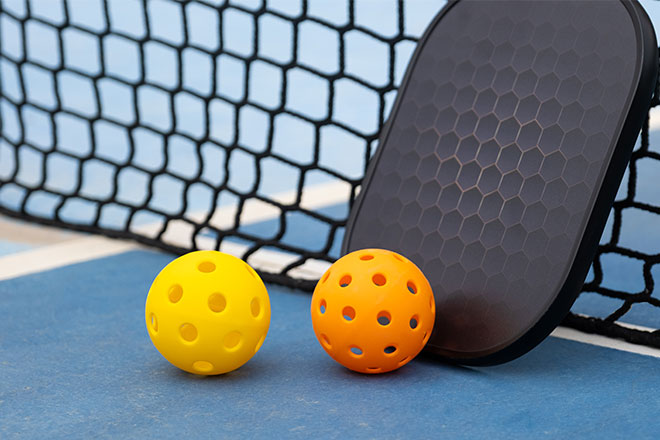
Indoor pickleball has evolved far beyond taped lines inside school gyms. Across the country, clubs, private facilities, and homeowners are investing in dedicated indoor courts designed for performance, durability, and player comfort.
Planning an indoor court involves much more than painting boundaries and installing a net. Ceiling height, lighting layout, flooring systems, and acoustics all influence the overall playing experience. Thoughtful preparation during indoor pickleball court construction leads to better long-term results.
This guide walks you through the major components of indoor pickleball court construction so you can plan with clarity and confidence.
Understanding Regulation Court Dimensions
A regulation pickleball court measures 44 feet in length and 20 feet in width. These dimensions apply to both singles and doubles play. The non-volley zone extends 7 feet from the net on each side.
The total space required for an indoor court exceeds the playing surface itself. Professional installations recommend additional clearance to promote safe and comfortable movement.
Ideally, plan for:
- At least 5 feet behind each baseline
- 3 to 5 feet on each sideline
- Additional spacing between adjacent courts in multi-court facilities
Ceiling height also matters. A minimum of 18 to 20 feet is typically recommended for unobstructed lobs and overhead shots. Higher ceilings create a more open feel and improve tournament-level play.
Choosing the Right Location
Indoor pickleball courts can be built in:
- Warehouses
- Commercial buildings
- Converted retail spaces
- Sports complexes
- Large residential structures
When evaluating a building, consider floor stability, structural support, ventilation, and electrical capacity for lighting systems. Concrete slabs are the most common base for indoor courts. The slab should be level and free of significant cracks before any surface system is installed. If the facility will host multiple courts, thoughtful layout planning improves traffic flow and spectator viewing areas.
Selecting the Best Indoor Court Flooring
Acrylic-Coated Concrete
Many facilities rely on a concrete slab finished with a multi-layer acrylic coating system. This setup delivers consistent ball bounce and dependable grip.
Acrylic systems also create vibrant color schemes and precise line striping. Textured finishes designed for indoor environments maintain traction while remaining comfortable underfoot.
Cushioned Sport Systems
Cushioned flooring incorporates elastic or rubberized layers beneath the acrylic surface. These systems reduce impact stress on knees and hips during extended sessions. Facilities that serve frequent players or older demographics often select cushioned options to improve comfort without sacrificing performance.
Modular Sport Tiles
Some indoor courts use modular interlocking tile systems. These snap-together panels sit over a flat slab and provide uniform traction and mild shock absorption. Tiles allow faster installation and simplified repairs, as damaged sections can be replaced individually.
Each flooring type has advantages. The right choice depends on budget, usage frequency, and the type of players you plan to serve.
Planning for Proper Lighting
Lighting is one of the most overlooked components of indoor sports court construction. Pickleball requires consistent, shadow-free illumination across the entire playing area. Uneven lighting can affect visibility near the net and along baselines.
LED high-bay fixtures are common in large facilities. They provide bright, energy-efficient coverage with a long lifespan. Fixtures should be positioned to avoid glare directly above the net. Color temperature also matters. Neutral white lighting around 4000K to 5000K typically works well for indoor sports.
Professional lighting design improves player comfort and enhances the overall appearance of the space.
Addressing Acoustics and Sound Control
Indoor pickleball is known for its distinctive popping sound. In enclosed spaces, that sound can echo and amplify quickly. Acoustic panels mounted on walls and ceilings help reduce reverberation. Insulated wall systems and sound-dampening materials also improve the overall environment.
Facilities located in mixed-use buildings or near residential areas should pay close attention to sound management during construction planning. Controlling noise improves the player experience and reduces complaints from neighboring spaces.
Net Systems and Court Accessories
A pickleball net measures 36 inches high at the sidelines and 34 inches at the center. For permanent indoor courts, net posts are typically anchored directly into the concrete slab. This provides stability and a clean appearance.
Portable net systems may be used in multi-sport court construction, but dedicated facilities usually opt for permanent installations.
Additional accessories to consider include:
- Court divider curtains
- Player benches
- Storage racks for paddles and balls
- Scoreboards
These features contribute to a professional and organized facility.
Multi-Court Facility Design
If you are building more than one court, layout efficiency becomes even more important. Courts can be arranged side-by-side or back-to-back depending on building dimensions. Adequate spacing between courts reduces interference during play.
Divider nets between courts prevent stray balls from interrupting adjacent games. Spectator seating can be placed along outer boundaries or elevated platforms. Traffic flow should allow players to enter and exit courts without crossing active play areas.
Climate Control and Ventilation
Indoor pickleball courts require proper air circulation and temperature management. Without adequate ventilation, heat and humidity can build quickly during busy sessions. HVAC systems should be sized appropriately for the number of players and the court area.
Ceiling fans may assist with airflow in high-roof structures. Maintaining consistent temperature enhances player comfort and protects surface coatings from premature wear. Air quality also plays a role in overall facility appeal, especially for long tournaments or league play.
Budget and Construction Timeline
Indoor pickleball court construction costs vary depending on location, building condition, and selected materials.
Primary cost factors include:
- Surface preparation
- Flooring system installation
- Lighting upgrades
- Net system installation
- Acoustic treatments
Building from scratch will involve higher structural and electrical expenses compared to converting an existing slab. Construction timelines depend on project complexity.
Surface curing, coating application, and lighting installation all require proper scheduling. Working with a licensed sports court contractor streamlines the process and reduces delays.
Maintenance Planning
A well-built indoor pickleball court requires ongoing care to maintain performance and appearance.
Regular cleaning removes dust and debris that reduce traction. Periodic inspections help identify minor surface wear before it becomes a larger issue.
Acrylic coatings may require resurfacing after several years of heavy use. Modular systems may need occasional tile replacement in high-traffic zones. Planning for court maintenance during the design phase protects your investment over the long term.
New Court Construction & Sport Court Resurfacing in Florida
When you are ready to move from planning to construction, partner with Armor Courts. We specialize in professional sport court construction and resurfacing in Florida, delivering high-performance pickleball, basketball, tennis, and multi-sport surfaces tailored to each facility.
As a family-owned company with over 15 years of combined experience, we focus on craftsmanship, detailed surface preparation, premium acrylic coating systems, and precise striping. From new indoor court builds to resurfacing existing slabs, our team manages every phase of the project.
We also back our work with a three-year guarantee on paint and a one-year guarantee on workmanship, giving you long-term confidence in your investment. Contact us today to schedule a consultation.