
Armor Courts
Tennis Court Resurfacing | Athletic Court Construction | Court Contractors/Builders

 Pickleball has shifted from a niche pastime into a sport that demands thoughtful planning and durable court design. A proper pickleball court layout influences play quality, safety, and long-term surface performance throughout the pickleball court construction process. When space planning starts too late, compromises often follow.
Understanding how much room the court, run-off zones, fencing, and surrounding features require helps property owners make informed decisions before construction begins.
This approach supports smoother play, balanced spacing, and a court that fits naturally within its environment rather than feeling forced into place.
Why Pickleball Court Layout Deserves Early Attention
Pickleball appears simple at first glance, yet the layout extends well beyond painted boundary lines. The court must support lateral movement, quick reactions, and uninterrupted play. Inadequate spacing around the playing area often leads to safety concerns, disrupted rallies, and premature surface wear near high traffic zones.
Early layout planning also supports better integration with existing properties. Residential backyards, shared recreational areas, and commercial facilities each introduce different spacing limitations. Addressing those constraints early allows design choices that feel intentional rather than reactive.
The layout stage also influences lighting placement, drainage flow, and fencing alignment, all of which affect how the court performs over time.
Standard Pickleball Court Dimensions Explained
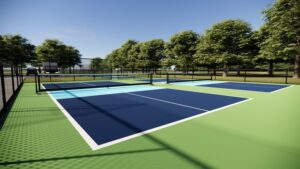
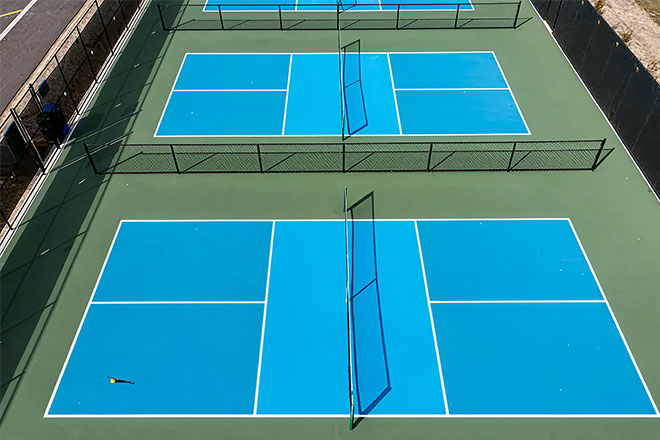
The official playing surface measures forty-four feet long and twenty feet wide. These dimensions remain consistent across recreational and competitive play. While the court itself remains compact, the surrounding clearance area determines how usable the space feels during real play.
Clear zones around the court support safe movement during volleys and baseline exchanges. Without these buffers, players often hesitate or alter movement patterns, which changes how the game feels. The court lines alone represent only part of the required footprint. Designers must treat the playing surface and surrounding clearance as one functional area rather than separate components.
Recommended Clearance Around the Court
Side and baseline clearance shapes how comfortably players move during rallies. Space along the sides allows lateral motion near the kitchen line and during defensive play. Baseline clearance supports full swing mechanics and quick directional changes.
For dedicated pickleball installations, expanded clearance zones create a more forgiving playing experience. Multipurpose courts may require creative compromises, but thoughtful orientation and surface transitions can offset tighter layouts. Adequate spacing also reduces wear along boundary edges, which often experience the highest foot traffic.
Outdoor Pickleball Court Layout Considerations
Outdoor courts introduce environmental variables that influence layout decisions. Sun orientation affects visibility and player comfort. Wind exposure impacts ball flight and may require fencing or wind screens positioned beyond standard clearance zones.
Drainage also plays a role in outdoor layouts. Courts built on existing slabs or asphalt surfaces must account for water movement away from the playing area. Improper grading can shorten surface lifespan and disrupt play after rainfall.
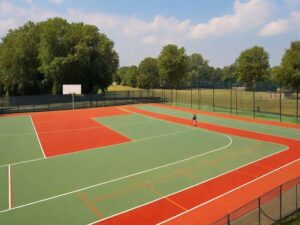
Outdoor facilities that also feature other recreational surfaces may benefit from coordinated planning. Properties that include amenities such as tennis, basketball, or even shuffleboard courts can share access paths and buffer zones when layout planning aligns from the start.
Indoor Pickleball Court Space Planning
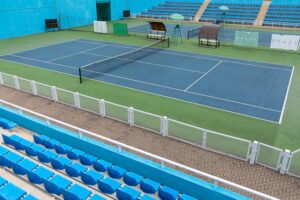
Indoor pickleball courts require different layout considerations. Ceiling height becomes as important as floor space. Lob shots and overhead play demand sufficient vertical clearance to maintain natural gameplay.
Lighting placement must align with the court orientation to limit glare. Structural columns, walls, and spectator seating influence where courts fit within gymnasiums or multi-use facilities. Proper layout planning avoids awkward court placement that limits player movement or creates blind spots.
Indoor surfaces also face different wear patterns than outdoor courts. Entry points, sidelines, and service areas receive concentrated foot traffic. Layout decisions that distribute movement more evenly across the surface help extend coating life and reduce future maintenance demands.
Multi-Court Pickleball Layouts
Facilities that host multiple pickleball courts must think beyond individual dimensions. Spacing between courts affects noise levels, ball intrusion, and overall play flow. Tight spacing may increase court count but often sacrifices player experience.
Shared run-off zones can work when planned correctly, especially in recreational settings. However, competitive or high-traffic facilities benefit from defined separation that minimizes interruptions. Layout planning at this scale also influences fencing design, walkways, and access points.
Multi-court facilities often plan for future maintenance or upgrades. Surface access for equipment, resurfacing schedules, and phased construction all benefit from layouts that allow flexibility over time. Some facilities coordinate maintenance planning with services such as shuffleboard court resurfacing to streamline upkeep across multiple amenities.
How Armor Courts Helps You Plan With Confidence
At Armor Courts, we approach pickleball court layout as a foundation decision, not a finishing step. Our team evaluates available space, usage goals, and long-term maintenance needs before construction begins. With over fifteen years of combined experience, we build layouts that balance playability, durability, and realistic planning so each court works as intended from day one.