
Armor Courts
Tennis Court Resurfacing | Athletic Court Construction | Court Contractors/Builders

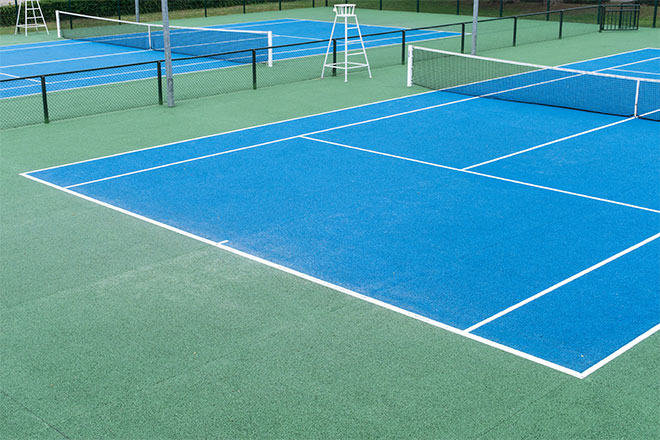
Pickleball has exploded in popularity, and with that growth comes a surge in outdoor pickleball court construction. From backyard installations to municipal complexes, players want surfaces that deliver consistent bounce, solid traction, and long-term durability.
Not every outdoor pickleball court surface performs the same. The material you select influences ball response, joint comfort, maintenance demands, and how well the court withstands sun exposure and rain.
What Makes a Good Outdoor Pickleball Surface?
A well-built surface should provide:
- Consistent and predictable ball bounce
- Good traction for quick lateral movement
- Resistance to cracking and fading
- Drainage that limits puddling
- Reasonable maintenance over time
Pickleball involves fast starts, sharp cuts, and frequent direction changes. The surface must support this movement without becoming slippery or overly abrasive. With those priorities in mind, let’s compare the top surface options.
Concrete Courts
Concrete remains one of the most widely used foundations for pickleball facilities. Many public parks and school campuses rely on poured concrete slabs as their structural base.
Performance and Durability
Concrete delivers strong structural integrity. When installed with proper expansion joints and a stable sub-base, it can perform for decades. Ball bounce tends to feel firm and consistent, which many players prefer.
Concrete also tolerates heavy use. Community facilities often choose it because it handles high foot traffic and continuous play without significant structural wear.
Limitations
Concrete is extremely hard. That firmness increases joint impact during extended matches, and falls can result in scrapes or bruises.
Hairline cracks may develop over time due to temperature changes and ground movement. While small cracks may not immediately affect play, they can become more visible if left untreated.
Concrete is rarely used as the final outdoor pickleball court surface on its own. Most installations include a coating system to enhance traction and protect the slab.
Asphalt Courts
Why Asphalt Is Popular
Asphalt generally costs less than concrete and can be installed more quickly. When freshly laid, it creates a smooth playing area with solid ball response. For projects focused on cost control, asphalt often serves as a practical starting point. Many municipalities select it for recreational facilities due to lower initial investment.
Where Asphalt Can Struggle
Asphalt offers more flexibility than concrete, which can be helpful in certain climates. However, it is more vulnerable to surface cracking over time. Freeze-thaw cycles and prolonged sun exposure may lead to splitting or gradual surface breakdown.
Periodic sealing and resurfacing are necessary to maintain appearance and performance. Without routine care, the surface can become rough or uneven.
As with concrete, asphalt typically receives an acrylic coating to create a finished outdoor pickleball court surface suitable for regular play.
Acrylic-Coated Surfaces
How Acrylic Improves Play
Acrylic coatings introduce texture, which increases traction and improves foot stability. Players can change direction quickly without excessive slipping. The coating also shields the base from ultraviolet exposure and moisture intrusion.
Color customization enhances visual clarity. Many facilities use contrasting shades to define the playing area and out-of-bounds zones.
Some systems incorporate cushioned layers beneath the top coat to add light shock absorption. That added comfort can make a noticeable difference during long tournaments or daily league play.
Maintenance and Longevity
Acrylic surfaces require periodic pickleball court resurfacing and cleaning every few years, depending on usage and climate. With proper care, they maintain consistent performance and a professional look.
For competitive and recreational outdoor pickleball, acrylic-coated courts are often the preferred choice.
Post-tension Concrete
Advantages
This reinforcement method reduces the likelihood of wide cracks developing over time. Stress is distributed more evenly across the slab, which makes it attractive for large multi-court facilities. Venues anticipating heavy daily usage sometimes invest in post-tension systems for added structural reliability.
Considerations
Installation costs are higher than standard concrete. The process also requires experienced contractors familiar with tensioned systems. For high-end public or private facilities, post-tension concrete can offer added peace of mind.
Modular Interlocking Tiles
Performance Benefits
Many modular systems feature a suspended design that promotes airflow and water drainage beneath the surface. After rainfall, courts often return to play more quickly than solid slabs.
Surface texture is integrated into the tile design, delivering a consistent grip. Some products include mild shock absorption to reduce joint fatigue.
Customization is another benefit. Homeowners can select color patterns and incorporate logos for a personalized look.
Drawbacks
Modular systems usually cost more upfront than basic asphalt installations. The base underneath must be level to avoid uneven spots. In extremely hot climates, lower-grade tiles may expand or fade. For backyard pickleball courts and multi-sport spaces, modular tiles offer convenience and customization.
Cushioned Court Systems
Why Players Like Cushioned Courts
These systems reduce the impact stress on knees and hips. For frequent players or older athletes, this added comfort can be a major advantage. Ball bounce remains consistent because the cushioning is engineered specifically for court sports.
Cost and Installation
Cushioned systems require specialized materials and a licensed pickleball court construction contractor. The initial investment is higher than that of basic acrylic coatings.
They are often found in clubs, private communities, and tournament facilities where player comfort is a top priority.
Climate Considerations
Outdoor pickleball courts must withstand local weather patterns. In hot climates, surfaces face prolonged UV exposure. Acrylic coatings with UV-stable pigments help maintain color and texture. In colder regions, freeze-thaw cycles can stress both asphalt and concrete. Proper drainage and sub-base preparation reduce long-term damage.
Rainfall also plays a role. Courts that drain efficiently return to play faster. Modular tile systems with built-in drainage channels perform well in wet environments, while well-coated acrylic courts also resist standing water.
Ignoring climate factors can shorten surface lifespan and increase maintenance costs.
South Florida Pickleball Court Builders & Resurfacing Experts
Ready to bring a professional-quality pickleball court to your home or facility? Armor Courts is a family-owned court construction and resurfacing company serving South Florida communities. We specialize in outdoor athletic court design, construction, resurfacing, and modular sport surfaces for pickleball, basketball, tennis, and multi-sport spaces.
Our team handles everything from site preparation to final striping, offering custom color combinations and high-performance acrylic systems built for Florida’s climate. Whether you are upgrading an existing court or starting from scratch, contact us for durable, great-playing surfaces tailored to your space, goals, and long-term use.