
Armor Courts
Tennis Court Resurfacing | Athletic Court Construction | Court Contractors/Builders

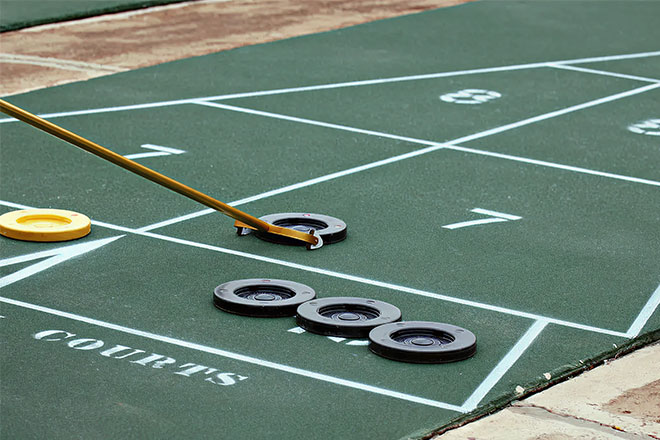 Shuffleboard courts rely on precision rather than power, which makes surface condition a defining factor in play quality. Subtle texture changes can alter puck glide, scoring accuracy, and overall enjoyment. Shuffleboard court resurfacing addresses these gradual changes by restoring surface smoothness, correcting wear patterns, and reestablishing consistent performance.
Unlike casual maintenance, resurfacing responds to accumulated stress from weather exposure, cleaning routines, and repeated play.
Understanding how this process works helps property owners plan smarter upgrades that align surface behavior with how the court is actually used.
Why Shuffleboard Courts Deteriorate Over Time
Shuffleboard courts face constant interaction between surface coatings, environmental conditions, and human activity. Outdoor courts absorb UV exposure that slowly breaks down coatings and fades color. Moisture moves through concrete slabs and affects surface stability. Even indoor courts experience wear from cleaning equipment, foot traffic, and puck abrasion.
These factors do not create immediate failure. Instead, the court loses texture uniformity, develops minor cracking, or shows uneven puck travel. Players may notice slower glides near seams or inconsistent response across scoring zones. Resurfacing addresses these layered issues before deeper structural repairs become necessary.
Signs That Indicate Resurfacing Is Needed
Visual cues often appear before performance issues become obvious. Color fading signals coating fatigue. Hairline cracks suggest movement beneath the surface. Rough patches disrupt puck movement and affect scoring precision. Drainage problems around outdoor courts allow moisture to sit longer than intended, accelerating wear.
Performance feedback also matters. When players adjust technique to compensate for surface inconsistency, resurfacing should move from consideration to planning. Waiting too long increases preparation work and extends downtime.
How Shuffleboard Court Resurfacing Differs from Other Courts
Shuffleboard courts require tighter surface tolerances than many athletic courts. Unlike tennis or basketball surfaces that prioritize traction, shuffleboard demands controlled glide with minimal resistance. That distinction shapes material selection, texture control, and application methods.
While the core principles of athletic court resurfacing apply across disciplines, shuffleboard surfaces demand finer calibration. This difference becomes clear when comparing resurfacing needs across sports. A facility that handles tennis court construction often adapts its expertise for shuffleboard projects, but the finishing process remains sport-specific. Texture depth, seal thickness, and curing conditions receive more attention during shuffleboard court resurfacing.
Surface Evaluation Before Work Begins
Every resurfacing project starts with assessment. Technicians evaluate coating adhesion, crack patterns, slab stability, and drainage behavior. This step identifies issues that coatings alone cannot correct. For example, cracks caused by substrate movement need treatment before new layers are applied.
Surface testing also examines slope consistency. Even minor deviations affect puck travel. Accurate evaluation prevents uneven results and reduces repeat work. Skipping this stage often leads to premature coating failure.
Preparation That Sets the Foundation
Preparation defines resurfacing success. Courts undergo thorough cleaning to remove debris, chalk residue, biological growth, and loose coatings. Pressure washing helps expose the true condition of the surface without altering its profile.
Crack repair follows cleaning. Flexible fillers address movement related cracks, while structural repairs correct deeper issues. Surface leveling resolves birdbaths or low spots that disrupt puck flow. This stage demands patience, since rushed repairs reappear after coatings cure.
Material Selection for Shuffleboard Court Resurfacing
Material choice shapes durability and play behavior. Acrylic-based coatings dominate shuffleboard resurfacing due to their controlled texture and weather resistance. These coatings allow technicians to adjust surface speed through layering techniques.
Sealants also play a role. They protect color layers from moisture intrusion and UV degradation. Additives fine tune puck glide without introducing slip hazards for players. Material compatibility matters, especially when courts share facilities with other sports that undergo tennis court resurfacing or multi-sport upgrades.
Application Methods and Texture Control
Application involves multiple coating layers applied under specific conditions. Temperature, humidity, and cure time affect bonding strength. Each layer serves a purpose, from adhesion to texture refinement.
Texture control receives special attention. Technicians adjust sand ratios and application pressure to balance glide and control. Too much texture slows play. Too little reduces scoring accuracy. Experienced crews adjust methods based on court orientation, exposure, and usage frequency.
Line Marking and Scoring Precision
Shuffleboard scoring depends on clean, accurate lines. During resurfacing, technicians repaint scoring zones after base coatings cure. Precision matters because even minor deviations affect competitive play.
Line paint must bond cleanly without bleeding or feathering. Protective top coats seal markings without altering surface behavior. This step completes the functional aspect of resurfacing and restores visual clarity.
Curing Time and Controlled Access
Curing allows coatings to reach full strength. During this phase, the court remains off limits. Foot traffic or early play disrupts bonding and leads to surface flaws.
Environmental control supports curing. Outdoor courts require weather monitoring. Indoor courts benefit from controlled airflow and temperature. Allowing proper cure time extends surface lifespan and reduces early maintenance needs.
Resurfacing Frequency and Cost Considerations
Most shuffleboard courts undergo resurfacing every five to seven years, depending on use and exposure. High traffic facilities may shorten that interval. Residential courts often extend it with routine care.
Cost varies based on surface condition, repair scope, and customization. Addressing issues early reduces preparation time and material usage. Comparing resurfacing timelines across sports helps facilities plan budgets, especially when coordinating upgrades alongside projects like tennis court construction.
Maintenance After Resurfacing
Post resurfacing care protects investment value. Regular cleaning prevents abrasive buildup. Moisture management reduces coating stress. Avoiding harsh chemicals preserves texture balance.
Facilities that schedule inspections catch minor issues early. Small touch ups extend surface life and delay full resurfacing. Consistent care aligns court performance with player expectations year after year.
How Shuffleboard Resurfacing Fits Within Multi Sport Facilities
Many properties host multiple court types. Coordinating resurfacing schedules across sports improves efficiency. For example, facilities planning tennis court resurfacing often align shuffleboard projects to streamline access and contractor scheduling.
Shared infrastructure like drainage, lighting, and fencing benefits from coordinated upgrades. This approach reduces disruption and supports consistent facility appearance.
Take the Next Step With Armor Courts
At Armor Courts, we approach shuffleboard court resurfacing as a performance-driven process, not a cosmetic refresh. We assess surface behavior, correct underlying issues, and apply coatings with long term use in mind. Our experience across tennis, pickleball, basketball, and shuffleboard courts allows us to align resurfacing methods with real play demands.
If your court shows signs of wear or inconsistent glide, our team is ready to help restore confidence in every match.