
Armor Courts
Tennis Court Resurfacing | Athletic Court Construction | Court Contractors/Builders

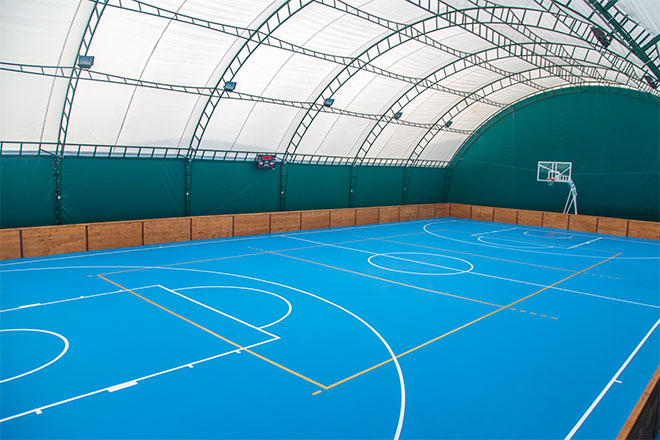
Indoor pickleball continues to expand rapidly. Private clubs, training centers, and residential sports facilities are investing in climate-controlled courts to meet growing demand. When planning a project, the first question usually centers on indoor pickleball court cost.
The final number depends on several variables, including location, building size, surface system, and the level of customization involved. Installing a court inside an existing structure costs significantly less than constructing a dedicated indoor facility from the ground up. Understanding the factors that influence indoor pickleball court cost helps you plan accurately and avoid unexpected expenses.
Average Cost Overview
The total investment typically falls into one of two categories:
- Installing a court inside an existing building
- Constructing a new building plus the court
If you already have a suitable indoor space with adequate ceiling height and slab foundation, pickleball court construction may range from tens of thousands to a few hundred thousand dollars, depending on materials and upgrades.
If you are building a dedicated facility from scratch, costs can increase substantially. Commercial construction, electrical work, and HVAC systems often represent the largest portion of the budget.
Court Size and Space Requirements
A regulation pickleball court measures 44 feet long by 20 feet wide, though this reflects only the playing surface. Comfortable indoor play requires additional clearance around the perimeter.
Most installations allow:
- At least 5 feet behind each baseline
- Several feet along the sidelines
- Extra space between courts in multi-court facilities
Ceiling height directly influences construction requirements. Indoor facilities typically recommend a minimum height of 18 to 20 feet to accommodate lobs and overhead shots.
As the overall footprint expands, so do lighting needs, heating and cooling capacity, and structural material requirements. Larger buildings naturally increase indoor pickleball court cost due to added square footage and system demands.
Building Construction Costs
For new indoor sports facilities, the building shell usually represents the largest single expense. Construction costs typically include:
- Concrete slab foundation
- Framing and structural support
- Roofing and insulation
- Electrical systems
- HVAC installation
- Permits and engineering
Commercial construction pricing varies by region but often ranges from $100 to $250 or more per square foot. Multi-court facilities can accumulate significant totals quickly. Leasing and renovating an existing warehouse typically reduces overall spending compared to full ground-up construction, though interior build-out expenses can still be substantial.
Flooring and Surface Systems
The playing surface plays a major role in both performance and cost.
- Acrylic-Coated Concrete
Many indoor courts use a concrete slab finished with a multi-layer acrylic coating system. This surface delivers reliable ball bounce and consistent traction. Surface preparation, coatings, and professional striping costs depend on slab condition and court quantity.
- Cushioned Sport Systems
Cushioned systems add shock-absorbing layers beneath the acrylic finish. These systems reduce joint stress and are often selected by facilities serving frequent players. Cushioned surfaces cost more than basic coatings but may attract members seeking added comfort.
- Modular Sport Tiles
Modular interlocking tile systems offer faster installation and easier maintenance. Individual sections can be replaced if damaged.
Pricing depends on material quality and total square footage, but modular systems may provide a middle-ground option in terms of cost and installation speed.
Your surface choice affects not only upfront expense but also long-term maintenance requirements.
Lighting Installation
Proper lighting is one of the most important components of indoor pickleball construction. LED high-bay fixtures are common in indoor sports facilities. They provide bright, energy-efficient coverage across the playing surface.
Lighting costs depend on ceiling height, fixture count, and electrical upgrades. Larger spaces require more fixtures and higher wattage output. Poor lighting can negatively impact visibility and player satisfaction, so allocating sufficient budget to this area is wise.
HVAC and Climate Control
Indoor courts must remain comfortable throughout the year. Large open spaces require properly sized HVAC systems to manage temperature and airflow. Without adequate ventilation, heat and humidity can build up during busy play sessions.
Installing commercial-grade heating and cooling systems adds both upfront and operating expenses. Energy efficiency should also be considered. Modern HVAC systems may cost more initially, but reduce monthly utility bills over time.
Equipment and Accessories
Beyond flooring and construction, several additional items contribute to the total cost.
These include:
- Permanent net posts
- Divider curtains
- Benches and seating
- Scoreboards
- Storage systems
Multi-court facilities often install divider nets to prevent stray balls from disrupting adjacent games. While these items represent smaller percentages of the total budget, they enhance functionality and professionalism.
Multi-Court Versus Single Court Costs
Building multiple courts increases total cost but can reduce the price per court in larger facilities. Shared lighting systems, HVAC infrastructure, and common areas spread costs across more playing surfaces. For commercial pickleball businesses, this improves long-term revenue potential.
Single-court residential installations cost less overall but lack the same economies of scale. The number of courts should align with your intended use and business goals.
Ongoing Operating Expenses
Building the court is only part of the financial equation.
Long-term expenses include:
- Utilities
- Insurance
- Surface maintenance
- Cleaning and staffing
After years of heavy play, acrylic systems require professional pickleball court resurfacing to restore traction and appearance. Cushioned systems may need periodic inspection. Planning for these ongoing costs helps avoid surprises after opening.
High-quality Athletic Court Construction in Florida
If you are planning an indoor pickleball project, work with a team that specializes in high-quality sport surfaces. Armor Courts provides professional athletic court construction and resurfacing services in Florida for pickleball, basketball, tennis, and multi-sport facilities.
As a family-owned company with over 15 years of combined experience, we manage every stage of the process, from surface preparation and crack repair to premium acrylic coatings and precise striping. We also stand behind our work with a three-year guarantee on paint and a one-year guarantee on workmanship.
Reach out to us if you are ready to invest in a durable, great-playing court.