
Armor Courts
Tennis Court Resurfacing | Athletic Court Construction | Court Contractors/Builders

Court downtime rarely feels inconvenient until play schedules, league calendars, or private use come to a halt. Understanding how long it takes to resurface a tennis court helps owners plan realistically instead of reacting to last minute disruptions.
Resurfacing is a multi-stage process rather than a single action. It is a sequence of preparation, repair, coating, and curing stages that depend heavily on surface condition, climate, and site access.
When expectations align with actual timelines, resurfacing becomes a controlled upgrade rather than a frustrating interruption.
What Tennis Court Resurfacing Involves
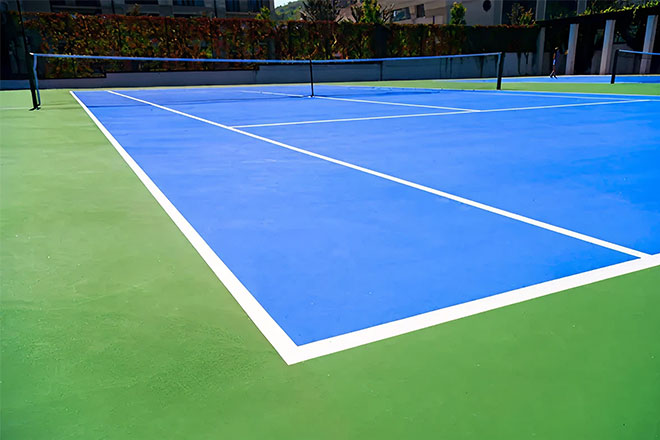
Resurfacing addresses surface wear that affects traction, ball response, and player safety. Acrylic hard courts develop color fading, micro cracking, and texture loss over time. These issues rarely appear overnight. They build gradually through UV exposure, moisture movement, and repetitive play, similar to surface stress patterns seen during tennis court construction as courts transition from new installation to regular use.
A resurfacing project restores performance by correcting surface fatigue, repairing cracks, applying new coatings, and allowing the materials to bond properly. Each phase requires adequate time. Shortcuts usually surface later as peeling paint, early cracking, or uneven texture that compromises long term play quality.
Typical Timeline for Tennis Court Resurfacing
For most outdoor hard courts, resurfacing spans about one week of active work, followed by curing time before play resumes. That estimate assumes moderate wear and favorable weather.
Surface preparation often takes one to two days. This stage includes cleaning, debris removal, and inspection. Repairs may require another one to three days depending on crack length, low spots, or edge deterioration. Coating application usually takes two to three days, as layers need drying time between passes. Final curing can add several additional days before the court handles regular use.
Indoor courts often move faster due to climate control, while outdoor courts remain subject to weather interruptions.
Surface Condition Plays the Largest Role
The existing condition of the court strongly influences how long resurfacing takes. Courts with light surface wear and stable bases progress quickly. Courts with extensive cracking, birdbaths, or base movement demand more preparation.
Crack treatment varies widely. Hairline cracks need flexible fillers that cure quickly. Structural cracks require deeper patching and longer set times. Low spots require leveling compounds that must harden fully before coatings go down. Each repair layer adds time but improves long term performance.
Weather Impacts Outdoor Resurfacing Schedules
Temperature and moisture directly affect acrylic coating behavior. Mild, dry weather allows coatings to dry evenly and bond correctly. High humidity slows drying. Rain can halt work entirely and may require re-preparation if moisture reaches uncured layers.
For this reason, outdoor tennis court resurfacing often schedules around seasonal weather patterns. Planning during predictable dry windows reduces delays and protects material performance.
Coating Systems and Cure Time
Not all resurfacing systems behave the same. Standard acrylic coatings dry faster than cushioned systems, which include additional rubber layers. Cushioned courts often add days to the schedule due to extra coats and longer cure times.
Color selection also matters. Darker colors absorb heat and may require longer cooling periods before play resumes. Line striping requires precise drying to prevent bleed or texture inconsistencies. This stage directly affects overall resurfacing time because rushing coatings leads to premature wear.
Accessibility and Site Logistics
Site access influences labor efficiency. Courts with clear staging areas allow crews to move materials quickly. Tight access, elevation changes, or restricted equipment paths slow progress.
Facilities with multiple courts may sequence resurfacing to keep some courts open, which extends total project duration but minimizes disruption. Private residential courts usually complete faster due to simplified logistics.
Indoor Versus Outdoor Court Timelines
Indoor tennis courts benefit from stable temperatures and humidity control. Crews avoid weather delays, and curing remains predictable. Many indoor resurfacing projects allow play within a few days after coating.
Outdoor courts require buffer time. Even ideal forecasts can change, and surfaces need protection during curing. Outdoor resurfacing usually schedules conservatively to account for unexpected moisture or temperature shifts.
Why Rushing Resurfacing Causes Problems
Attempting to shorten resurfacing timelines often leads to surface failure. Coatings applied over uncured repairs trap moisture. Courts opened too soon develop scuffing, peeling, or texture loss.
Proper resurfacing respects material behavior. Allowing each phase to complete fully improves surface life, reduces maintenance costs, and preserves consistent play characteristics.
How We Handle Tennis Court Resurfacing at Armor Courts
At Armor Courts, we approach resurfacing with the same discipline as new court construction. We assess surface condition, usage patterns, and scheduling priorities before setting a clear timeline. Our family owned team brings over fifteen years of combined experience to each project.
We complete resurfacing with attention to preparation, material behavior, and long term performance, then stand behind our work with real guarantees.
Ready to request a quote or start planning? Reach out and let us map the right path forward.