
Top Turf Field Designs To Consider For Your Next Project
Quick Summary
Effective turf fields align the playing layout with the primary sport, available space, expected traffic, and visual identity of the facility. Single sport, multi sport, branded, color zone, baseball, softball, and compact training concepts each serve different uses. Clear markings, balanced graphics, practical zoning, and professional construction create a surface that looks polished and supports consistent use.
Outdoor athletic spaces now serve schools, communities, clubs, and private facilities with increasingly varied performance and visual expectations. A thoughtful turf field design brings those priorities together through layout, markings, color, branding, and intended use. The field must suit its primary sport while supporting player movement, clear visibility, traffic, and the character of the property. Space limitations and long term plans can also influence the final concept. The right approach starts with understanding how the surface will function every day.
Let’s explore the strongest design ideas for your next project.
A Clean Layout for One Main Sport
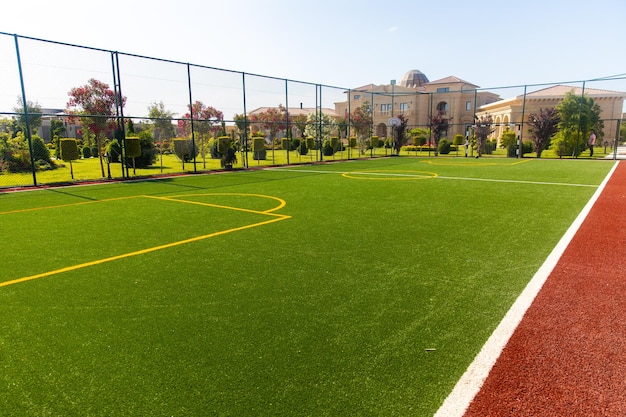
Designed around a single activity, this layout creates a focused playing environment with clear visual structure. Soccer, football, lacrosse, and field hockey each benefit from markings that remain easy to read from every angle. The field can follow regulation dimensions or adapt to site limits while preserving comfortable movement and proper spacing. Color choices usually stay simple, using one main surface tone with highly visible boundaries. Schools, clubs, training centers, and competition venues often prefer this format for dedicated use. Branding can still appear in selected areas without distracting players, coaches, officials, or spectators during practices, games, tournaments, and scheduled facility programs throughout the competitive calendar each year.
One Field Built for Multiple Games
When several programs share one facility, the layout must support each activity without creating visual confusion. Football, soccer, lacrosse, and recreational games can use separate line colors that remain easy to identify. Removable goals and adaptable equipment can expand scheduling options throughout the year. Schools, parks, residential communities, and recreation centers often choose this format when space is limited. Careful line placement keeps overlapping markings organized from both field level and spectator areas. The final result should give every sport a clear presence while maintaining one cohesive appearance across practices, league play, community events, and other scheduled uses for every user group throughout the facility calendar each year.
Bring Team Identity into the Surface
Strong visual identity can turn an athletic surface into a recognizable extension of a school, club, or organization. Center logos, mascots, initials, end zone lettering, and coordinated colors can create a memorable impression. Graphic placement should support the playing layout rather than compete with boundaries, scoring areas, or directional lines. Large elements often work well at midfield, behind home plate, or near prominent spectator views. Smaller crests and restrained lettering suit facilities that prefer a more refined presentation. Balanced contrast, scale, and spacing help the surface appear polished from ground level, seating areas, photographs, broadcasts, and overhead perspectives during competitions, ceremonies, and community gatherings throughout the full year.
Create a Natural Look with Green Panels
For facilities that prefer a traditional athletic appearance, alternating shades of green can add depth without visual clutter. The panel pattern may run lengthwise, crosswise, or follow selected zones within the playing area. Wider bands create a stronger rhythm, while narrower bands produce a more detailed finish. Soccer, football, baseball, softball, and shared recreation fields can all use this approach. Subtle tonal changes preserve visibility for game lines, logos, and player movement. Panel direction can also influence how large the field appears from seating areas, nearby buildings, event photography, and overhead views, giving the surface a familiar look with added visual character throughout scheduled play across every season.
Make a Statement with Bold Color Zones
Selected areas of a field can carry stronger colors to create energy, identity, and visual separation. End zones, borders, sidelines, scoring areas, and warning tracks may feature tones connected to a team or organization. Clear contrast helps each zone remain visible while preserving readable game markings. Football fields, school campuses, training centers, and modern recreation facilities often suit this style. A measured palette can highlight important spaces without overwhelming the full surface. From the playing level to elevated seating, the finished layout should feel distinctive, organized, and easy to understand during regular use, special events, and high attendance competitions while maintaining a premium visual finish across the facility.
Rethink the Baseball or Softball Field
Few sports offer as much room for visual variation as baseball and softball. A full field layout can separate the infield, outfield, foul territory, batter areas, and warning track through contrasting tones. Partial turf may focus on high traffic zones such as baselines, home plate, on deck circles, and dugout approaches. Logos can appear behind home plate, within foul territory, or across selected outfield areas. The surface may imitate grass and clay while keeping a clean, consistent presentation. Each choice should suit the facility level, field dimensions, viewing angles, and expected use, resulting in a coordinated space that feels purposeful from entrance to outfield throughout every scheduled season.
Maximize Smaller Spaces with Training Zones
Limited square footage can still support a complete training environment when every zone has a defined purpose. Numbered areas, sprint lanes, agility patterns, target markings, and practice grids can serve several exercise formats. Movable goals may also support youth activities, small sided games, and skill development. Schools, gyms, sports academies, residential communities, and private training facilities can benefit from this format. Clear spacing helps coaches organize sessions while keeping the surface structured and inviting. Custom colors, logos, and professional markings can give the area a finished identity without making the layout feel crowded, confusing, or overly complex for different ages and ability levels during every planned session.
Bring Your Turf Vision to Life
The strongest field designs begin with a clear purpose, a realistic view of the site, and an understanding of how people will use the space over time. A polished result balances appearance, movement, visibility, durability, and long term value without allowing one feature to overpower the rest. When those elements work together, the field feels intentional from the first practice through every major event.
At Armor Courts, we help you shape that vision through professional sport surface construction, resurfacing, multi-sport layouts, modular sports flooring, repairs, and ongoing court maintenance with confidence from concept through completion. Our team brings more than 15 years of combined experience to projects that require careful planning, quality materials, clear communication, and dependable workmanship. We can also coordinate custom colors, markings, branding, and layout details that suit your facility and its users.
Ready to plan a field that performs as impressively as it looks? Contact us today to discuss your project.
FAQs
What should I consider when choosing a turf field layout?
The right layout depends on the main sport, available space, user groups, and how often the field will be used. A dedicated layout offers clear markings, while a shared layout supports several activities. Visual elements such as colors, logos, and panel patterns should support playability, sightlines, and a polished overall appearance.
Can a small property accommodate a useful turf field?
Yes. A smaller area can become a practical training field with sprint lanes, numbered zones, agility patterns, practice grids, target markings, and movable goals. Careful spacing keeps the surface organized and easy to use. Custom colors and branding can also give the compact facility a professional identity without making it feel crowded.
Can custom logos and colors be added to turf fields?
Custom graphics can include logos, mascots, initials, end zone lettering, coordinated colors, and selected field zones. Placement and scale should work with boundaries and game markings rather than compete with them. Strong contrast improves visibility, while restrained graphics may suit facilities that want a cleaner and more refined athletic presentation.