
June 27, 2026
Tennis Court Construction Specifications: A Comprehensive Guide
Quick Summary
Tennis court specifications for construction outline the exact measurements, materials, and structural layers needed for a functional playing surface. These guidelines cover court dimensions, line markings, surface types, base preparation, drainage, and clearance space planning. Each component affects ball behavior, player movement, and long-term durability of the court. Proper specification planning also guides decisions during tennis court construction and helps maintain consistent performance over time. Maintenance planning and tennis court resurfacing further extend the lifespan of the surface.
Tennis court specifications for construction define how a court is measured, structured, and assembled for consistent play. These guidelines shape dimensions, surface layers, and layout decisions that influence performance and durability. Armor Courts follows established design standards when planning sport surfaces for residential and commercial projects.
Standard Tennis Court Specifications for Construction Dimensions
Regulation tennis courts follow fixed measurements set for competitive play and recreational use. The standard playing area measures 78 feet in length and 27 feet in width for singles matches. Doubles play expands the width to 36 feet while maintaining the same court length.
The full construction footprint extends beyond the playing lines to include safety clearance zones around the court. This added space allows movement beyond baselines and sidelines during rallies. During tennis court construction, contractors often plan for a total area near 120 feet by 60 feet to accommodate these requirements.
Net height standards also influence structural placement across the court. The center height measures 3 feet while the posts stand slightly higher at 3.5 feet. These measurements remain consistent across all official playing environments.
Clearance Space and Perimeter Planning in Tennis Court Specifications for Construction
Perimeter clearance plays a major role in safe movement around the playing area. Standard design practice allocates extra space beyond the baselines and sidelines to allow player recovery and motion during intense rallies. This space also supports equipment placement and boundary fencing without interfering with play.
During tennis court construction, planners typically allow around 12 feet behind each baseline and 10 feet on each side. These measurements may shift depending on available land and intended use of the court. Recreational courts sometimes use tighter layouts, while competitive facilities follow broader clearance zones.
Surface surroundings also affect long-term usability and safety. Proper grading around the court prevents water accumulation near edges. This design approach helps maintain stable playing conditions across different weather patterns.
Court Layout and Line Marking Specifications
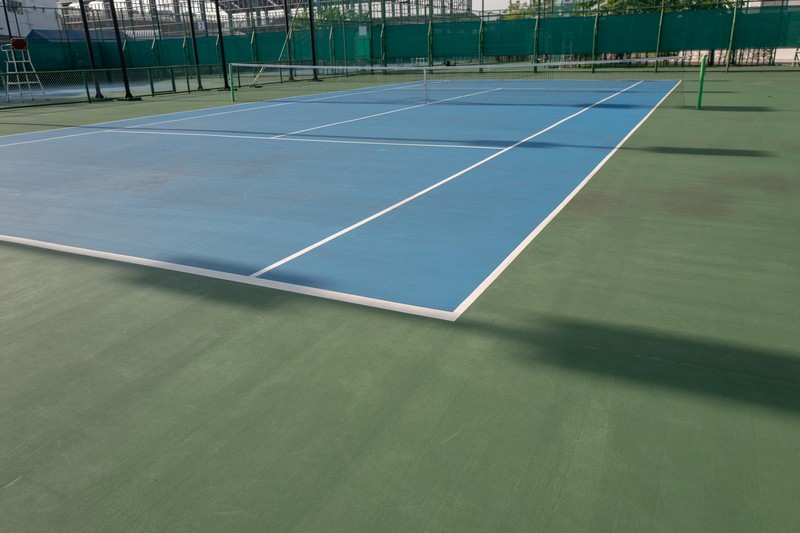
Court markings define how the game operates within the playing surface. Baselines mark the far ends, while sidelines separate singles and doubles play zones. Service lines divide the court into front and back sections for structured play.
Each service box measures 13.5 feet in width and 21 feet in depth. The center service line splits the boxes evenly, guiding serve placement on both sides. These markings are applied with precision to maintain balance across competitive play conditions.
Line thickness typically ranges from one to two inches, depending on surface type. The center mark on the baseline assists players during serving alignment. Accurate marking placement contributes to consistent ball judgment during matches.
Surface Layers in Tennis Court Construction Specifications
Surface selection plays a major role in tennis court performance. Hard courts use asphalt or concrete bases with acrylic coatings applied on top. Clay courts rely on layered crushed stone materials that shape slower ball movement.
Synthetic systems offer a modern alternative with consistent bounce characteristics. Grass courts require natural turf maintained under strict surface conditions. Each system affects speed, traction, and player response differently.
Surface texture also influences grip and ball control during play. Acrylic coatings often include cushioning layers to reduce impact on joints. Material selection depends on usage level, climate, and maintenance expectations.
Base Engineering and Drainage Requirements
A stable base supports long-term court performance under changing weather conditions. Engineers compact subgrade layers before placing asphalt or concrete foundations. This foundation controls movement and limits surface shifting over time.
Drainage systems direct water away from the playing area to prevent pooling. Slight surface slopes guide runoff toward designated drainage points. This design reduces standing water and helps maintain playable conditions after rainfall.
Crack resistance depends on correct base preparation and material bonding. Expansion joints in concrete bases reduce stress during temperature changes. Proper base engineering plays a major role in overall court stability.
Net System and Court Equipment Specifications
The net system sits at the center of every tennis court layout. Standard height remains 3 feet at the center and rises to 3.5 feet at the posts. This structure divides the court evenly for competitive play.
Support posts are placed outside the doubles sideline to maintain clear play space. A center strap holds the net at the correct height during matches. Equipment placement follows strict positioning rules across all regulated courts.
Lighting systems also form part of modern court design. Even light distribution improves visibility during evening play. Pole placement outside the boundary prevents interference with gameplay movement.
Maintenance Planning and Surface Longevity
Maintenance routines affect how long a court remains playable and visually consistent. Regular cleaning removes debris that can affect traction and surface texture. Small surface repairs help manage early wear patterns.
Recoating acrylic surfaces restores grip and color quality over time. Climate exposure influences how often maintenance work is scheduled. Temperature shifts and moisture levels play a role in surface aging.
Over time, tennis court resurfacing becomes necessary to restore structural balance and playing consistency. This process renews the top layer while maintaining the original base structure. Proper resurfacing extends court usability across many seasons.
Building Standards for Long-Term Court Performance
Construction standards guide every stage of tennis court development from grading to finishing. Accurate measurements and layered materials shape performance outcomes across different playing levels. These standards reduce structural irregularities and improve playing consistency.
Armor Courts applies structured planning methods when developing new sport surfaces for residential and commercial clients. Each project follows defined specifications that align with court usage needs and environmental conditions. This approach supports long-term durability and predictable performance outcomes.
Careful attention to materials, layout precision, and drainage design results in stable court systems. These elements work together to create surfaces that respond consistently under regular play conditions. Strong planning at the beginning reduces long-term surface issues.
Get Expert Help for Your Tennis Court Construction Project
At Armor Courts, we design and construct sport surfaces that follow precise tennis court specifications for construction tailored to your project goals. Our team handles athletic court construction and resurfacing with attention to layout accuracy, surface quality, and long-term performance.
Contact us to discuss your tennis court construction or resurfacing project. We build courts that match your space, usage needs, and performance expectations.
FAQs
Standard specifications include a 78-foot length and 27-foot singles width, expanding to 36 feet for doubles. The court also includes regulated service boxes, net height requirements, and defined line markings. Construction plans also account for additional clearance space beyond the playing area.
Drainage prevents water from pooling on or around the court surface. Proper grading and drainage systems help maintain surface stability and reduce long-term damage. Without it, cracks and surface deterioration can develop more quickly.
Common materials include asphalt and concrete for hard courts, crushed stone layers for clay courts, and synthetic acrylic systems. Each material affects bounce speed, traction, and maintenance needs. Selection depends on climate, usage, and performance expectations.
Resurfacing is needed when the top layer shows cracks, fading, or inconsistent bounce behavior. It restores surface quality without rebuilding the entire base. Regular resurfacing helps extend the overall lifespan of the court.