
May 28, 2026
What Is The Most Common Flooring Material Used For A Basketball Court?
Quick Summary
The most common basketball court floor material is maple hardwood for indoor courts and asphalt or concrete for outdoor courts. Maple is the gold standard for professional and school gyms. Asphalt is the most popular outdoor choice due to low cost and weather resistance.
If you are planning a basketball court, the first question is what surface to use. The answer changes based on if your court is indoors or outdoors. Basketball court construction starts with picking the right basketball court floor material. The most common choices are maple hardwood for indoor play and asphalt or concrete for outdoor play. Each material has strengths and weaknesses.
This post breaks down the most popular options so you can make the right choice for your space and budget.
Indoor Basketball Court Floor Materials
Indoor courts need consistent ball bounce, good shock absorption, and a smooth surface. The material must hold up under heavy use without warping or cracking.
Maple Hardwood
Maple hardwood is the most common basketball court floor material for indoor courts. You will find it in NBA arenas, college gyms, and high schools. The NBA uses maple in nearly all its stadiums. Maple has a tight grain that resists splintering. It also offers excellent shock absorption, which helps reduce injuries from jumping. Maple courts can last 75 to 80 years with good care.
The uniform grain pattern gives maple a clean look and helps players see the ball moving. Most professional leagues use hard maple for their games. Downsides include higher cost and regular maintenance like refinishing and sealing. Maple is not suitable for outdoor use because rain and sun warp the wood.
Other Indoor Options
Some facilities choose vinyl or synthetic flooring. Luxury vinyl tile (LVT) has become popular for private schools and church gyms. Vinyl costs less than wood and offers good shock absorption. It is also easier to clean. However, vinyl may not provide the same traction as wood.
Modular interlocking tiles are another choice. They snap together over a flat base and are easy to replace. Some multi-sport facilities use them to change court layouts quickly.
At Armor Courts, we build indoor courts with the right material for your needs. We are a family-owned business with over 15 years of experience. We offer a three-year guarantee on paint and a one-year guarantee on our work.
Outdoor Basketball Court Floor Materials
Outdoor courts face sun, rain, snow, and temperature swings. The basketball court floor material must handle these elements. The two most common options are asphalt and concrete.
Asphalt
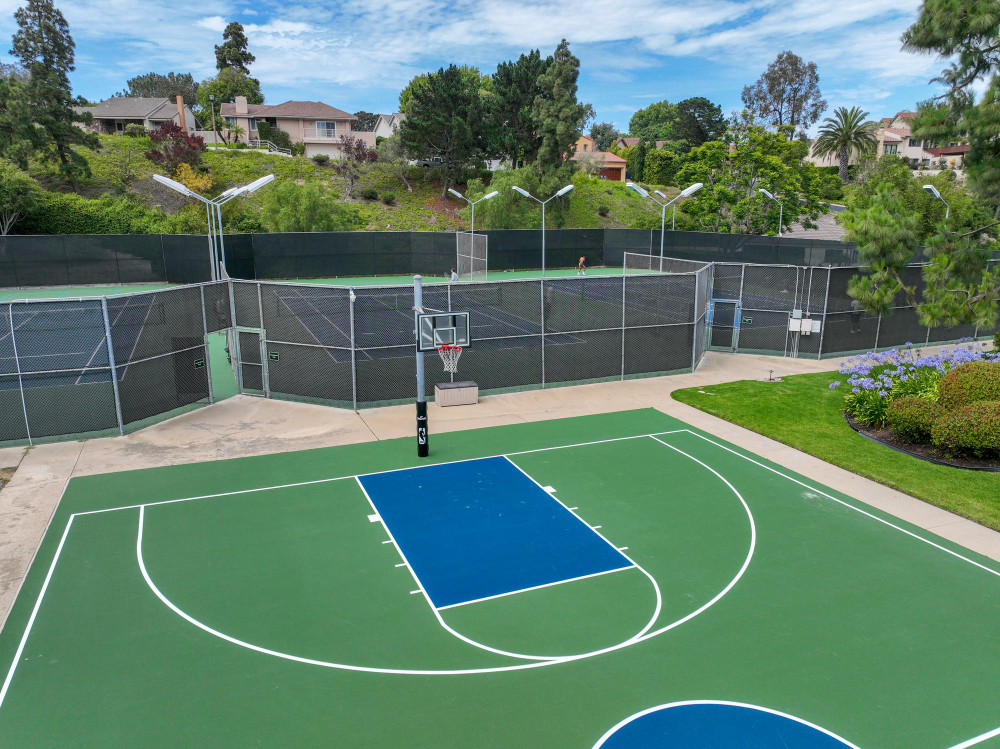
Asphalt is the most common surface for outdoor basketball courts. It is affordable, durable, and weather-resistant. An asphalt court typically lasts 15 to 20 years with proper care. The dark color absorbs heat, which helps the surface dry faster after rain.
Asphalt is softer than concrete, which makes it easier on players’ joints. It is also easy to repair with sealants. Many community parks use asphalt because it works well for large spaces and keeps costs low. Downsides: asphalt can become very hot in direct sun. The surface may get rough over time, increasing wear on shoes and scraped knees from falls.
Concrete
Concrete is the second most common outdoor surface. It is extremely durable and can last for decades with little maintenance. Concrete offers a firm, stable playing surface. It can also be customized with different colors.
The biggest drawback is hardness. A fall on concrete hurts more than on asphalt or modular tiles. The rigid surface puts more stress on players’ knees and joints. Concrete costs more to install than asphalt.
Modular Sports Tiles
Modular sports tiles have become more popular for home courts. These interlocking plastic tiles snap together over a concrete or asphalt base. They offer excellent traction and shock absorption. The tiles allow water to drain through, so the court dries quickly after rain.
Modular tiles come in many colors. If a tile gets damaged, you replace just that single piece. Downsides include higher upfront cost. Some tiles may fade or become brittle after years of sun.
Court repairs on modular systems are simple because you only replace broken tiles. For asphalt or concrete, repairs like crack filling take more work.
Which Material Is Right for You?
The right basketball court floor material depends on your budget, location, and how you plan to use the court.
- Indoor professional or school use:Maple hardwood is best. It offers top performance and longest life.
- Indoor home or recreational use:Vinyl or modular tiles work well. They cost less and need less maintenance.
- Outdoor community or park courts:Asphalt is most cost-effective for large spaces.
- Outdoor home courts:Concrete with acrylic coating or modular tiles offer the best balance of durability and comfort.
Modular sports flooring is a great middle ground for homeowners who want a safe court that drains quickly. Turf fields installation uses different materials, but for basketball, modular tiles give you the best of both worlds.
Frequently Asked Questions
What material do NBA courts use?
NBA courts use maple hardwood. The wood comes from northern hard maple trees. Maple provides consistent ball bounce, excellent shock absorption, and a smooth, professional look. With proper maintenance, an NBA court floor can last 75 to 80 years.
Can I use hardwood flooring for an outdoor basketball court?
No. Hardwood is not suitable for outdoor use. Rain and sun will warp and damage the wood. Outdoor courts need materials like asphalt, concrete, or modular tiles that can handle weather exposure.
Is concrete or asphalt better for an outdoor court?
It depends on your needs. Asphalt costs less and is softer on joints. It works well for large community courts. Concrete lasts longer and needs less maintenance. It is a good choice for home courts where you want a permanent, low-maintenance surface.
What is the most affordable basketball court floor material?
For outdoor courts, asphalt is the most affordable option. For indoor courts, vinyl or modular tiles cost less than hardwood. Keep in mind that cheaper materials may need more repairs or replacement over time.
How long does a basketball court floor last?
Maple hardwood can last 75 to 80 years with good care. Asphalt lasts 15 to 20 years. Concrete can last 30 years or more. Modular tiles last 15 to 20 years. Regular maintenance like cleaning, sealing, and resurfacing helps all materials last longer.
Armor Courts builds basketball courts that perform well and stand the test of time. Whether you choose maple hardwood, asphalt, concrete, or modular tiles, we make sure the job is done right. Request a quote today to get started on your court.