
Armor Courts
Tennis Court Resurfacing | Athletic Court Construction | Court Contractors/Builders

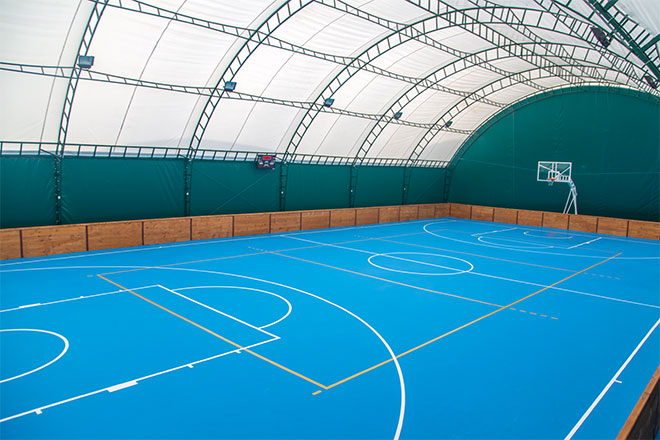
Constructing an indoor basketball court represents a significant financial commitment. Private residential gyms, school facilities, and performance training centers all face different budget considerations, and the total investment depends on size, materials, geographic location, and the degree of customization. Understanding indoor basketball court cost early in the planning process helps establish realistic expectations and prevents budget surprises.
Project scope plays the largest role in determining price. A basic half-court installed inside an existing structure costs far less than developing a full-size standalone building from the ground up. The sections below outline the primary components that shape the overall indoor basketball court cost.
Average Cost Range
The cost of indoor basketball court construction typically falls into one of two categories:
- Building inside an existing structure
- Constructing a new building plus the court
Property owners who already have access to a warehouse or gymnasium may spend anywhere from tens of thousands to several hundred thousand dollars, depending on flooring type and selected upgrades.
New construction designed specifically for basketball can push total investment into the high six figures or exceed one million dollars, especially for regulation-size courts with premium finishes. The difference in indoor basketball court cost typically stems from structural and mechanical construction expenses beyond the playing surface itself.
Size and Layout Impact on Cost
Court dimensions directly influence overall pricing. The larger the playing surface, the more materials, labor, and structural planning the project requires, which steadily increases total investment.
An NBA court measures 94 feet long by 50 feet wide, while high school courts measure 84 feet in length. A half-court layout requires considerably less square footage, which reduces flooring, lighting, and climate control expenses. Smaller layouts may also simplify building design and shorten installation timelines.
Ceiling height is another major factor. Comfortable play generally requires 20 to 24 feet of vertical clearance to accommodate arc shots, rebounds, and competitive drills. Taller structures demand additional framing, insulation, and higher-capacity lighting systems, all of which add material and labor costs.
Larger courts also increase heating, cooling, and electrical loads, which raise long-term operating costs in addition to initial construction expenses. Expanded square footage often means higher utility bills, greater maintenance demands, and more extensive lighting layouts throughout the facility.
Building Construction Costs
If you are constructing a dedicated facility, building expenses will likely represent the largest portion of your budget.
Major building-related costs include:
- Foundation and slab
- Steel or wood framing
- Roofing and insulation
- Electrical and HVAC systems
- Permits and engineering
Commercial-grade construction commonly ranges from $100 to $250 or more per square foot depending on region and building specifications. For full-size facilities, total construction expenses often surpass the cost of the court flooring itself.
Flooring and Surface Options
The playing surface is one of the most visible and performance-driven parts of the project.
- Hardwood Flooring
Traditional maple hardwood remains the gold standard for competitive basketball. It delivers consistent ball response and a timeless appearance. Installed hardwood systems often range from $8 to $15 per square foot or more, depending on subfloor design, custom graphics, and layout complexity.
- Synthetic Sport Flooring
Synthetic surfaces, such as vinyl or polyurethane systems, offer durability and lower maintenance compared to wood. These surfaces may cost slightly less than hardwood, depending on brand and installation method.
- Modular Sport Tiles
Modular interlocking tiles are another option for indoor courts. They can be faster to install and allow easier replacement of damaged sections. Flooring choice significantly affects both upfront cost and long-term maintenance expenses.
Lighting Costs
Lighting frequently receives less attention than it deserves during early budgeting.
Indoor basketball courts require bright and evenly distributed illumination. LED high-bay fixtures are common in modern facilities because they combine strong output with energy efficiency.
Lighting expenses vary based on ceiling height, fixture count, and electrical upgrades. A professional lighting package can add tens of thousands of dollars to the total indoor basketball court cost. Insufficient lighting negatively affects visibility and overall player experience, making this a critical investment area.
Equipment and Accessories
Beyond the court surface itself, several additional elements contribute to the total cost.
These may include:
- Adjustable basketball hoops
- Wall padding
- Divider curtains
- Scoreboards
- Sound systems
High-quality wall padding improves safety during fast-paced play. Divider curtains are common in multi-use facilities where multiple courts operate at once. Each added feature increases the total investment but also enhances the overall functionality of the space.
HVAC and Climate Control
Climate control is especially important for indoor sports facilities. Large open spaces require properly sized HVAC systems to maintain comfortable temperatures. Without adequate ventilation, heat and humidity can build quickly during active games.
Installing commercial-grade heating and cooling systems adds to both upfront and ongoing operating costs. In colder climates, insulation and heating requirements may increase construction expenses as well.
Customization and Design Elements
Customization plays a major role in pricing.
Adding features such as:
- Custom center-court logos
- Multi-color wood stain patterns
- Branded wall graphics
- Premium seating areas
can increase project costs significantly.
Luxury residential courts often include lounge spaces, viewing balconies, and advanced audio systems. These additions create a more immersive environment but also expand the overall budget. If the goal is simple recreational use, design elements can be kept minimal to control costs.
Ongoing Maintenance Expenses
Building the court is only part of the financial picture. Long-term maintenance also matters. Hardwood courts require periodic refinishing, while synthetic and modular surfaces may need basketball court resurfacing or section replacement over time.
Utility costs, cleaning, insurance, and equipment maintenance all contribute to ongoing expenses. Planning for maintenance in advance protects the investment and prevents unexpected financial strain.
Florida Athletic Court Construction Specialists
When you are ready to invest in an indoor basketball court, work with a team that understands sport surfaces from the ground up. Armor Courts specializes in professional athletic court construction and resurfacing in Florida. From surface preparation and crack repair to premium acrylic coating systems and precise striping, we handle every phase of the project with care.
As a family-owned company with over 15 years of combined experience, we stand behind our work with a three-year guarantee on paint and a one-year guarantee on workmanship. If you want a durable, great-playing court built for long-term performance, contact us today to get a quote.