
Your Guide To Concrete Specifications For A Basketball Court
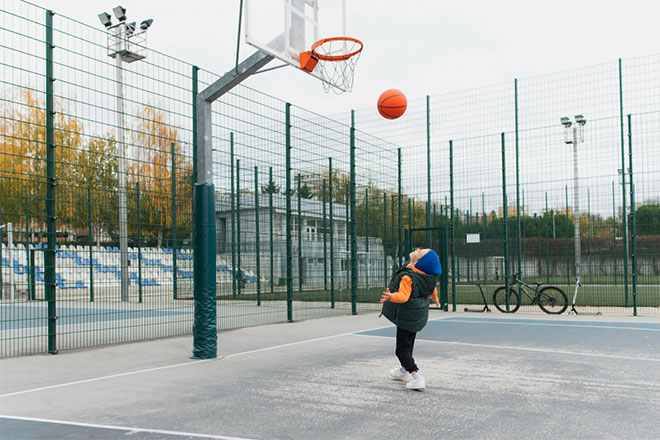
When constructing a basketball court, concrete specifications are vital to creating a high-quality, durable surface. These specifications determine the court’s ability to withstand frequent use and harsh weather conditions. This guide will cover key concrete specifications for a basketball court, including the slab thickness, reinforcement, and finishing touches.
Key Concrete Specifications for a Basketball Court
A basketball court typically requires a four-inch-thick concrete slab to build a strong foundation. This slab thickness ensures that the surface can handle the pressure of constant foot traffic and equipment. Additionally, using concrete with a compressive strength of at least 3500 PSI guarantees that the surface will hold up under heavy use and outdoor elements.
For basketball court construction, it is important to choose the right type of concrete. The mix should be designed to be durable, offering strength and long-lasting performance. High-quality concrete helps resist cracking and minimizes maintenance, keeping the court in top condition for many years of use.
Reinforcement Materials for Concrete Basketball Courts
Reinforcement, such as steel rebar, is best for maintaining the structural integrity of a concrete basketball court. Rebar is typically placed in a grid pattern within the slab to help distribute loads evenly across the surface. This reinforcement prevents cracks and makes sure that the court remains stable, even under intense pressure from players and weather conditions.
In addition to rebar, some courts may use wire mesh or post-tensioned cables for added strength. Wire mesh can be placed in the concrete mix to add extra durability, while post-tensioning helps reduce cracking. These reinforcement techniques improve the court’s ability to withstand heavy use and natural shifts in temperature and humidity.
Concrete Finishing for Optimal Playability
The finishing process for a concrete basketball court is important for a smooth, playable surface. Troweling the concrete creates an even finish, while polishing can bring a slightly smoother texture for better ball bounce. It is important to avoid rough patches or inconsistencies that could interfere with the game or cause injury.
Anti-slip treatments are also applied to the surface to maintain player safety. These treatments help prevent slips and falls, particularly during wet conditions. Additionally, high-quality paint is used to mark the court lines, making them visible and durable despite frequent play and weather exposure.
Maintenance of Concrete Basketball Courts
Proper maintenance is necessary to extend the life of a concrete basketball court and keep it in great condition. Regular cleaning removes dirt, debris, and spills that can degrade the surface. It is also important to inspect the court for any cracks or damage that could worsen over time, requiring timely repairs.
Resealing the concrete every few years helps protect it from weathering, moisture, and wear. Sealing the surface preserves its appearance while also preventing water from penetrating and causing damage. With the right maintenance practices, your basketball court will remain safe and functional for years to come.
Building a Long-Lasting Basketball Court
Understanding concrete specifications for a basketball court, from slab thickness to proper reinforcement, is key to building a court that lasts. Regular maintenance, including cleaning and resealing, is vital in keeping the court in top condition. By following these guidelines, your basketball court will create an excellent playing surface for years to come.
Armor Courts specializes in high-quality basketball court construction and resurfacing. Contact us today to learn more about our services and how we can help you create the perfect court for your needs.